Birds
―― Passerines (Flycatchers, Crows & Paradise Flycatchers) ――
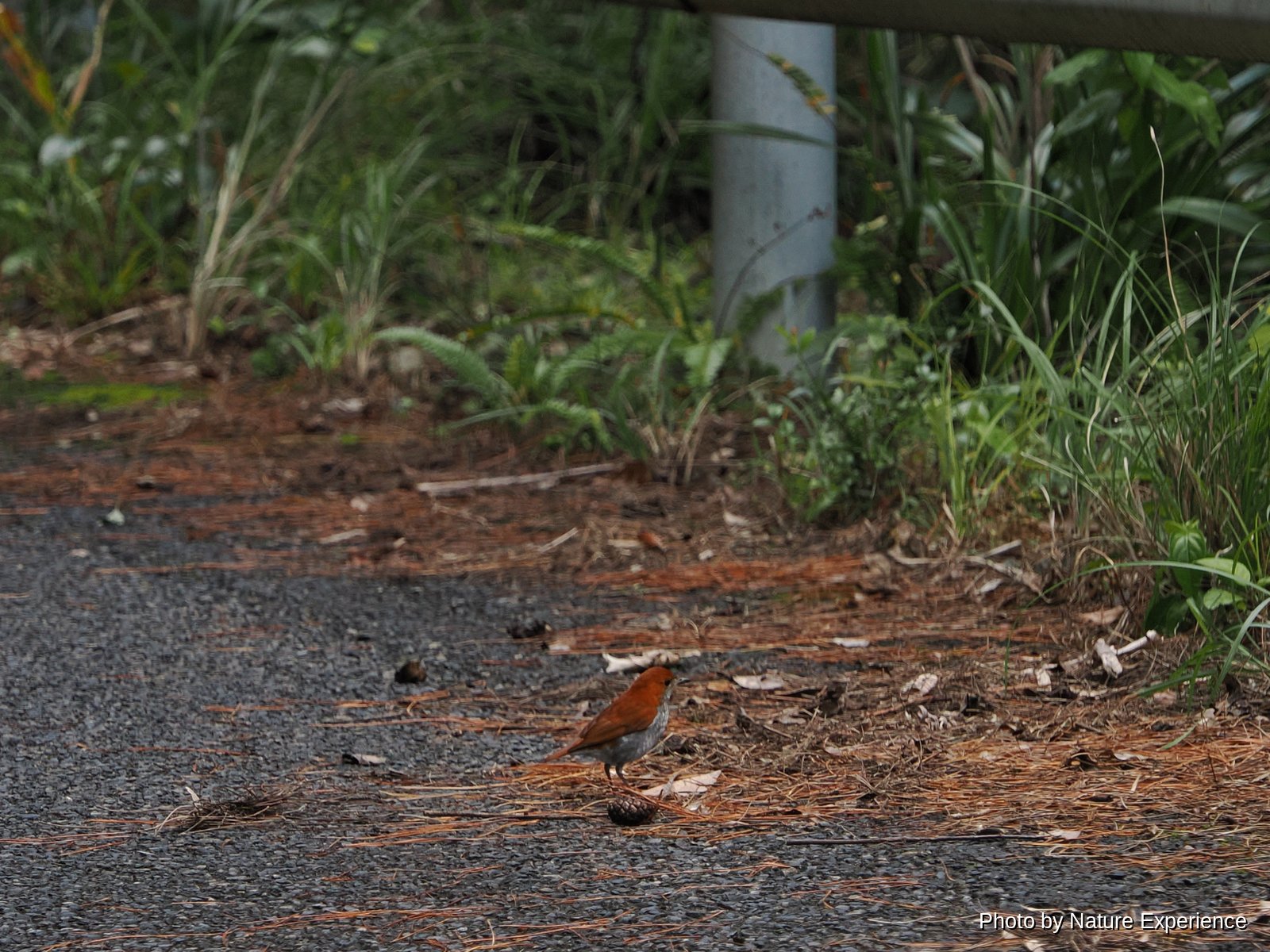
About 14 cm long, weighing about 18 g. A species endemic to Japan that breeds from the Danjo Islands through the Tokara Islands, Amami Oshima and its surrounding islets, to Tokunoshima; designated a Natural Monument in 1970. It is a year-round resident on Amami Oshima, but males sing especially often to proclaim territory during the breeding season from March to June, so following the song early in the morning is the best way to find one at that time of year. Males have a vivid orange-red head, back, and tail, and the black patches on the breast and flanks look like a "beard," which gives the species its Japanese name. Females are overall plainer in color. It forages for insects on the forest floor of evergreen broadleaf forest. A different species lives in northern Okinawa Island, but the two ranges do not overlap.
Capture and transfer prohibited (Natural Monument)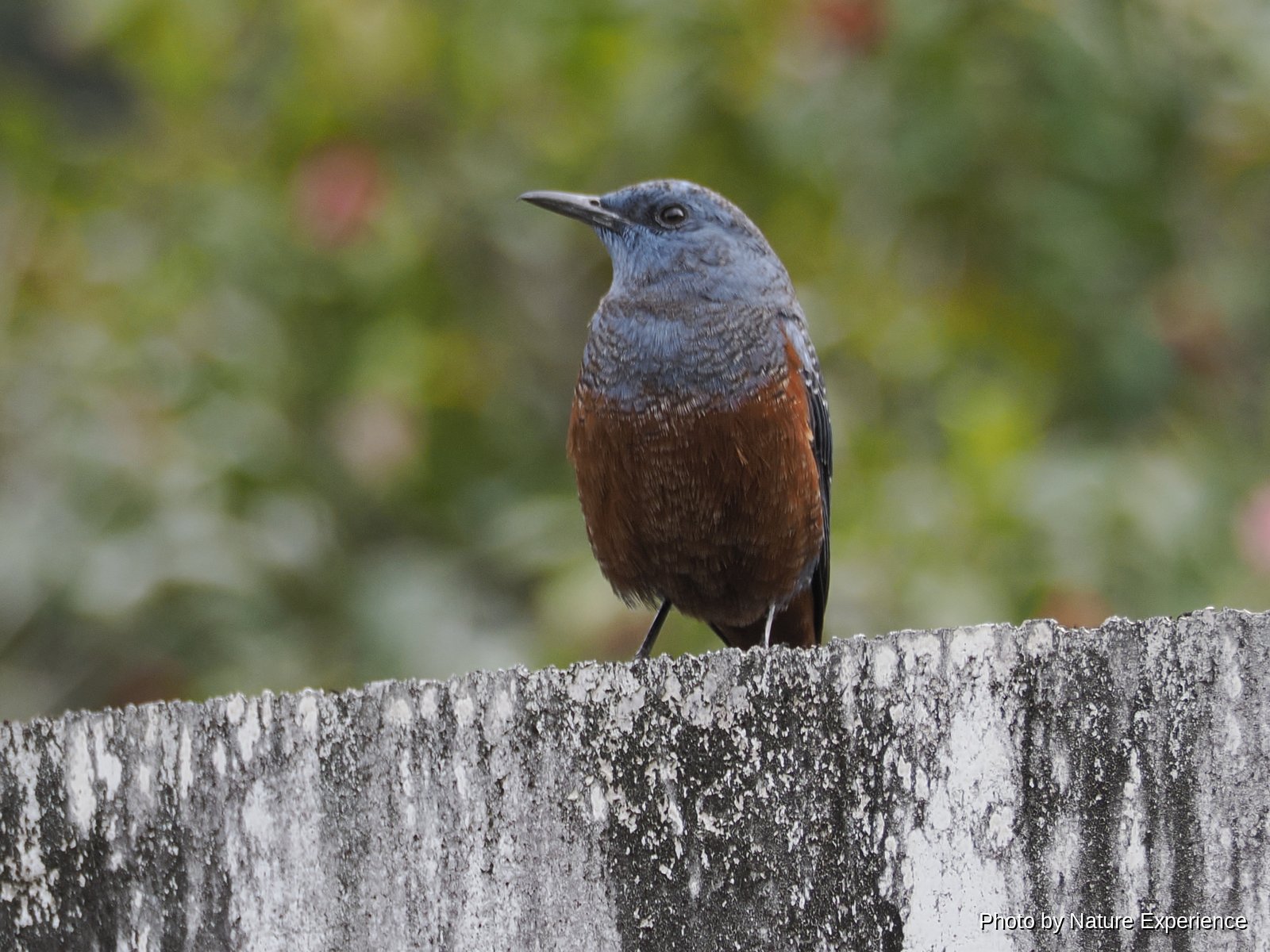
About 23 cm long. Males and females look very different: males are blue from the head to the back with reddish-brown underparts, while females are grayish-brown with dark scaly barring. A year-round resident on Amami Oshima, it traditionally favors rocky coastlines and harbors — as its Japanese name ("rocky shore thrush") suggests — but in recent years it has been spreading inland and into towns across Japan, and on Amami it is increasingly seen around houses, on rooftops, power lines, and in parking lots. A strongly predatory bird, it feeds on crustaceans, insects, lizards, and even small rodents, and sings a high, clear, elaborate song. It is solitary and holds a year-round territory; breeding is thought to begin around March.
Wildlife you can observe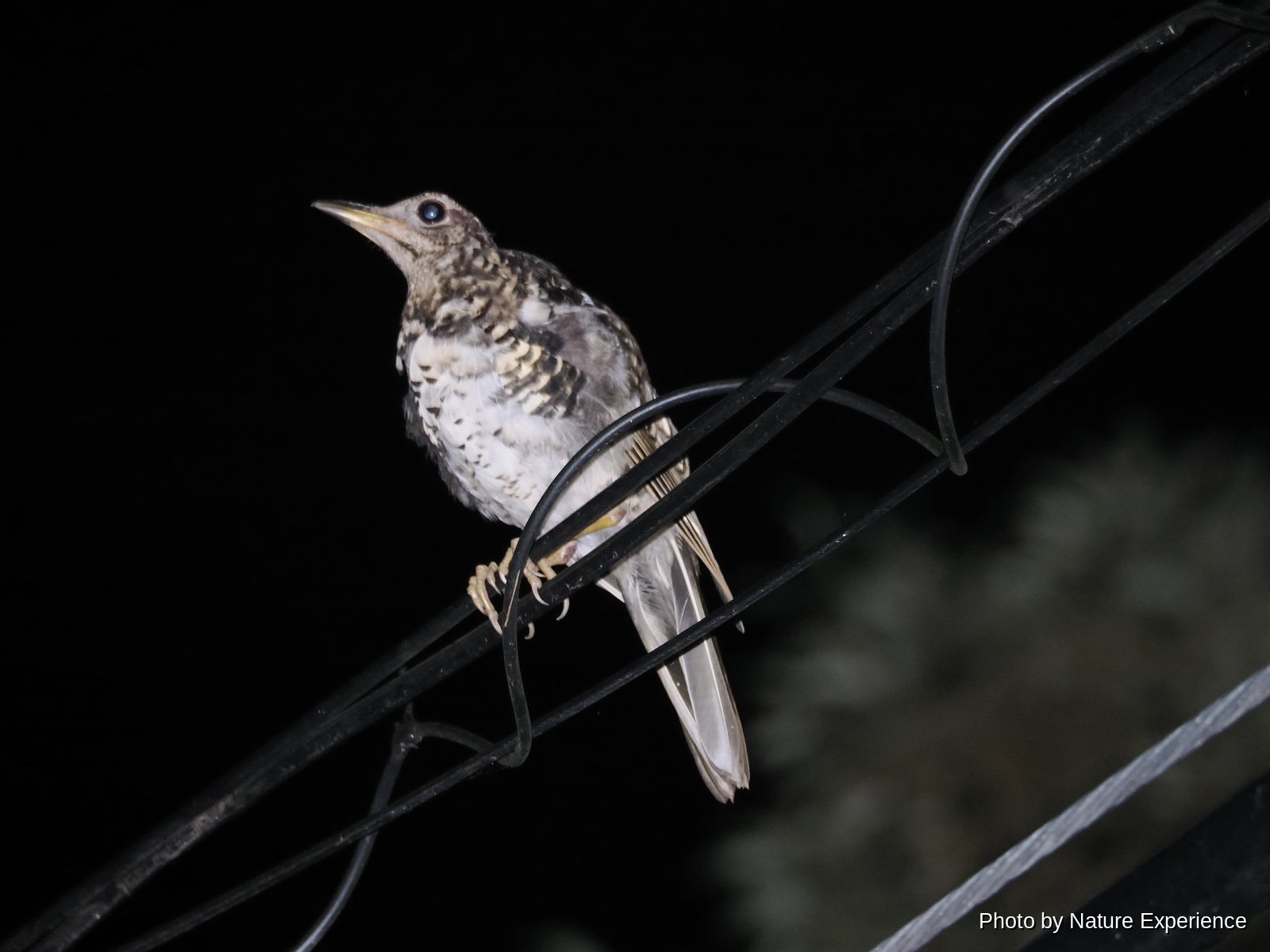
About 30 cm long. A resident bird found only on Amami Oshima, with a yellowish-brown ground color marked with black, tiger-like blotches. Designated a national Natural Monument and a Nationally Rare Wild Species. It prefers the dim forest floor of mature broadleaf forest and feeds on earthworms and the like. During the breeding season from February to early April, it sings a clear, beautiful "kyoroon, tsi-i" call in the dim light before dawn and at dusk. It once declined so sharply due to logging and the impact of invasive species that it was called a "phantom bird," but as the forest has recovered, its population has been on a recovering trend in recent years, and in March 2026 the Ministry of the Environment's 5th Red List downgraded its status from Vulnerable (VU) to Near Threatened (NT).
Capture and transfer prohibited (Natural Monument)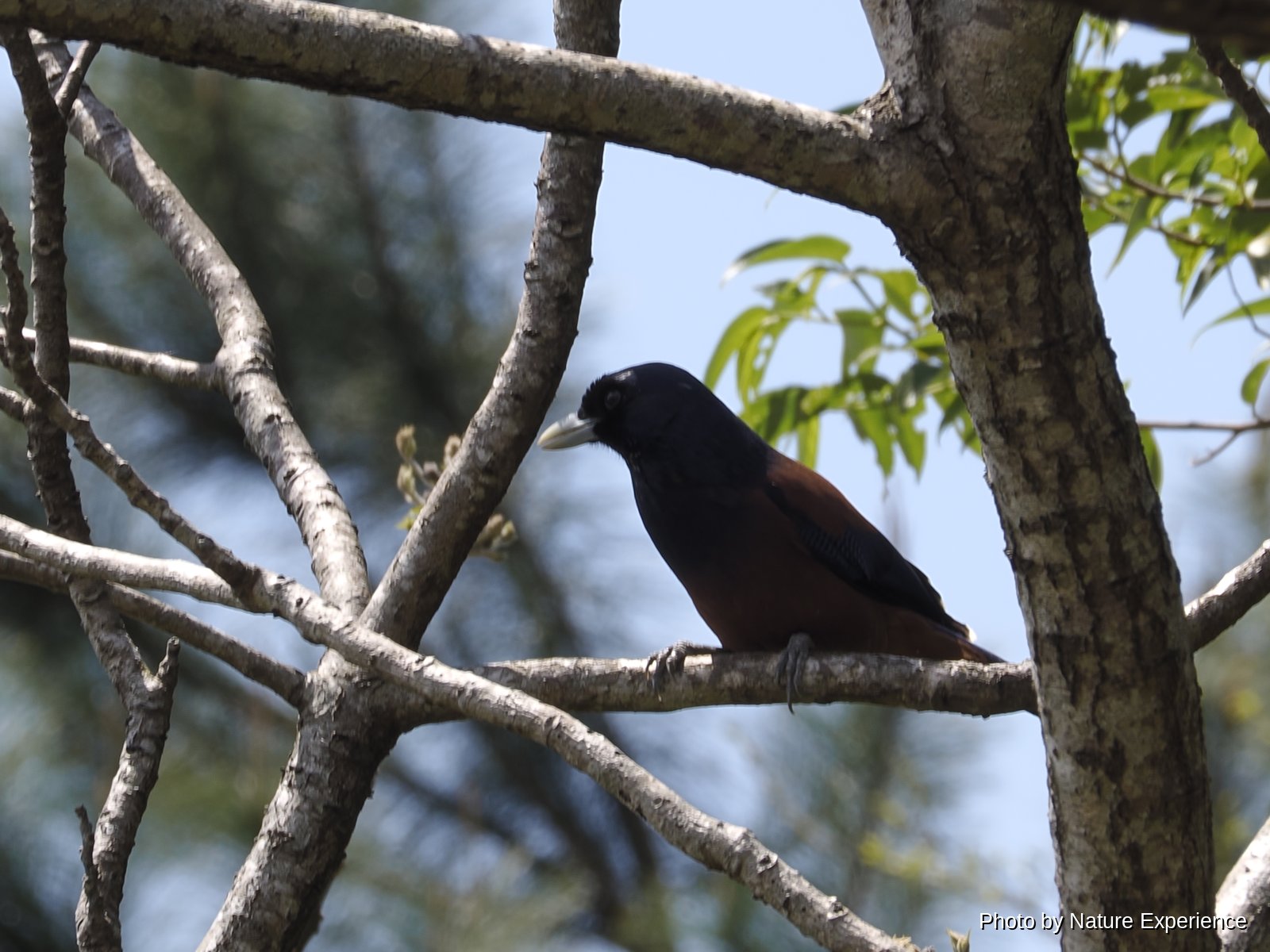
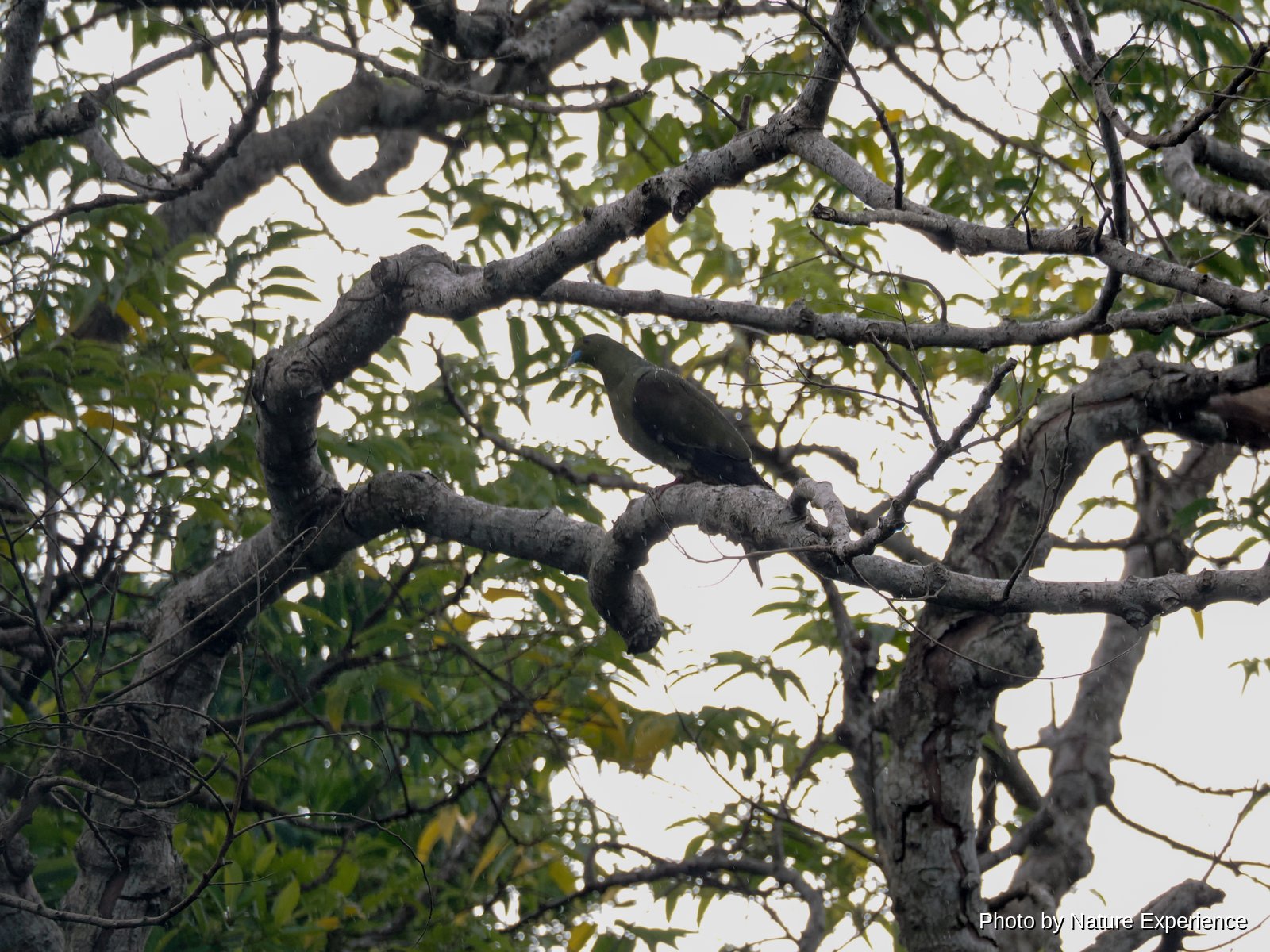
About 38 cm long. A species endemic to Japan found only on Amami Oshima, Kakeromajima, and Uke-jima, beautiful with its azure-blue head, wings, and tail, reddish-brown back, breast, and belly, and white bill and wingtips. Designated a Natural Monument in 1921. It prefers evergreen broadleaf forest and is omnivorous, feeding on chinquapin and oak acorns. A year-round resident, it can be observed throughout the year. The breeding season is from around February to May, when it lays 3-5 eggs in a tree hollow or similar site; late February through early April, when parent birds move about actively near the nest, is an especially good time to spot one. Its numbers once declined due to predation by feral cats and the introduced small Indian mongoose. Its status later improved, and in 2008 it was removed from Japan's Nationally Rare Wild Species. In 2024, the mongoose was also declared eradicated. It flies about actively during the day, but at night it can be observed resting on power lines or branch tips along forest roads.
Capture and transfer prohibited (Natural Monument)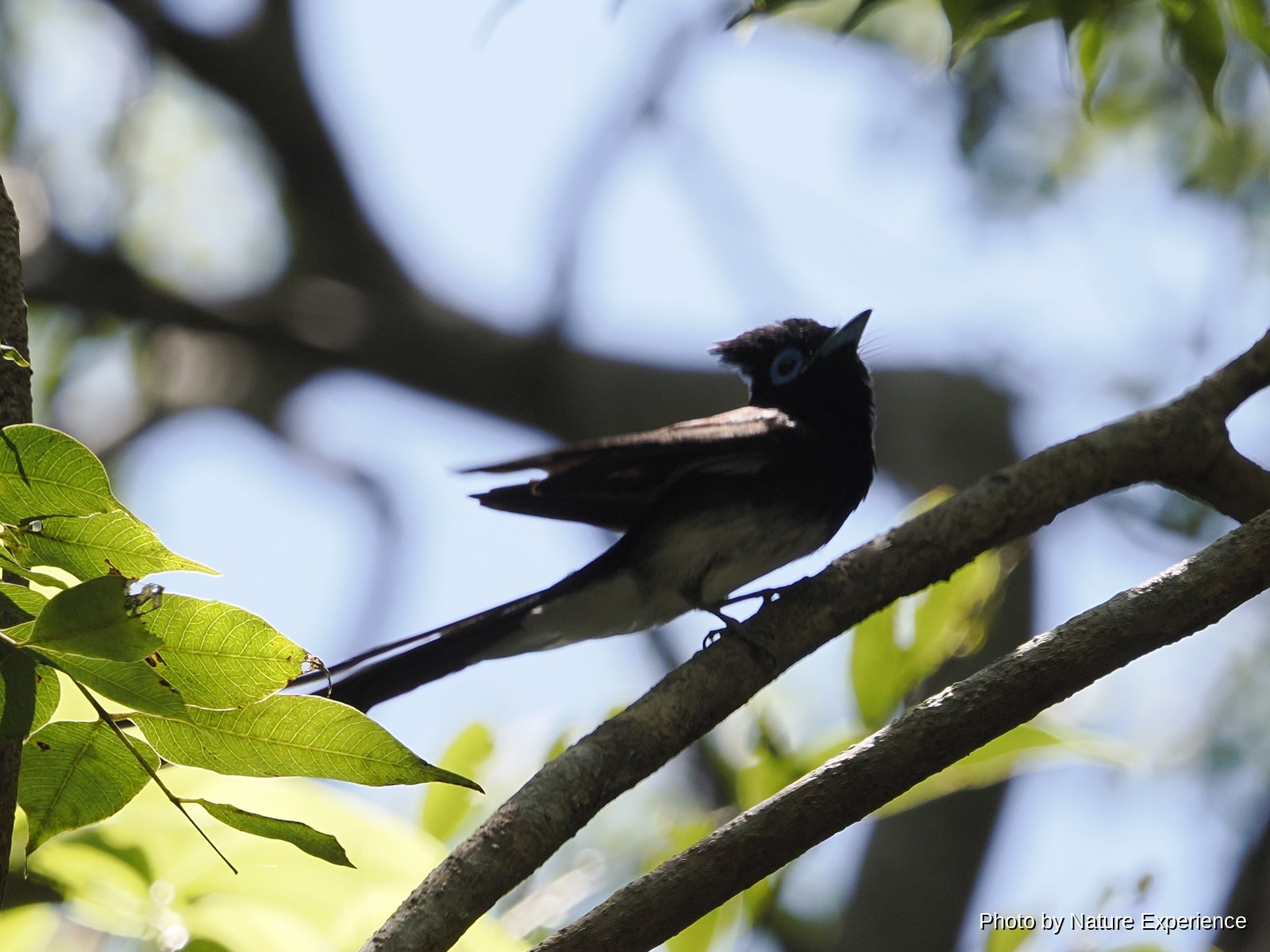
Males measure about 45 cm including the tail streamers, females about 18 cm. The whole body has a black-purple sheen, and the eye-ring and bill are a vivid cobalt blue. Males have tail feathers nearly three times the length of the body, giving them a striking silhouette in flight. On Amami Oshima it arrives as a summer migrant around April and, in the dim interior of the forest, flits from branch to branch catching flying insects such as small flies, wasps, and butterflies in mid-air. Its call is said to sound like "tsuki-hi-hoshi, hoi-hoi-hoi" ("moon, sun, stars, hoi-hoi-hoi"), which is why it is named the "three-light bird" after these three lights. From May to July it builds a cup-shaped nest of moss in the fork of a tree and shares incubation and chick-rearing duties. While unfledged chicks are in the nest, lingering close by or shaking the branch can cause the parents to abandon it, so it is best to watch briefly through binoculars from a distance. It heads back to its Southeast Asian wintering grounds around September.
Wildlife you can observe―― Coraciiformes (Kingfishers) ――
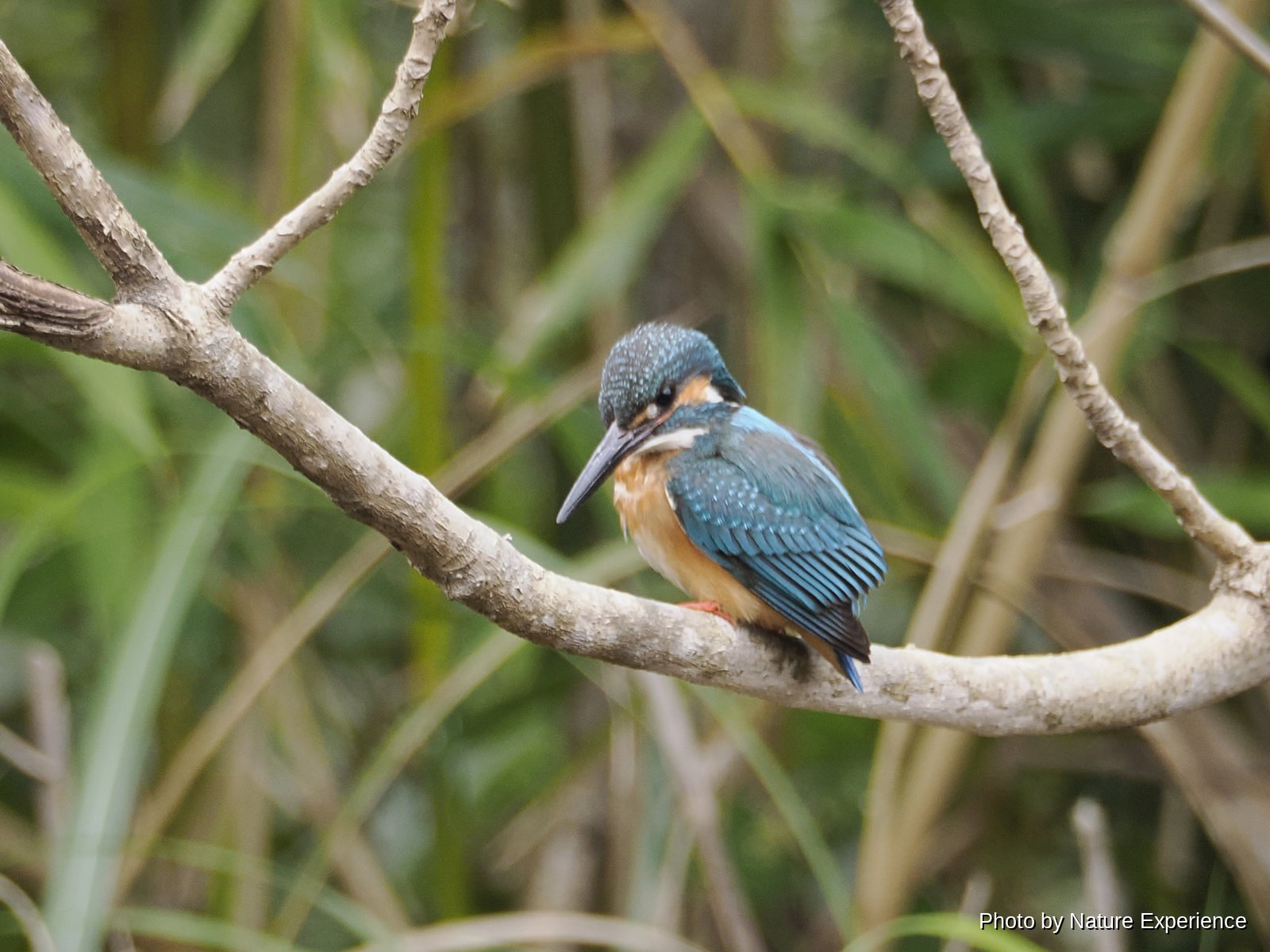
About 17 cm long and weighing 19-40 g, a small kingfisher. The head and back have a glossy blue-green sheen and the underparts are a vivid orange, earning it the nickname "jewel of the water's edge." On Amami Oshima it is a year-round resident found along rivers, irrigation channels beside rice paddies, and ponds of many kinds. It watches the water from a perch on an overhanging branch or post, then plunges in to catch small fish or shrimp as soon as it spots one. Strongly territorial, it lives alone or in pairs and digs a tunnel nest into a riverbank or eroded slope. The breeding season runs from around March to August, and pairs may raise more than one brood; courtship includes the male passing a small fish to the female, known as courtship feeding, and the birds are especially active and easy to watch during this period. Unlike most of the birds on this site, it can be watched by daylight at the water's edge rather than in the night forest.
Wildlife you can observe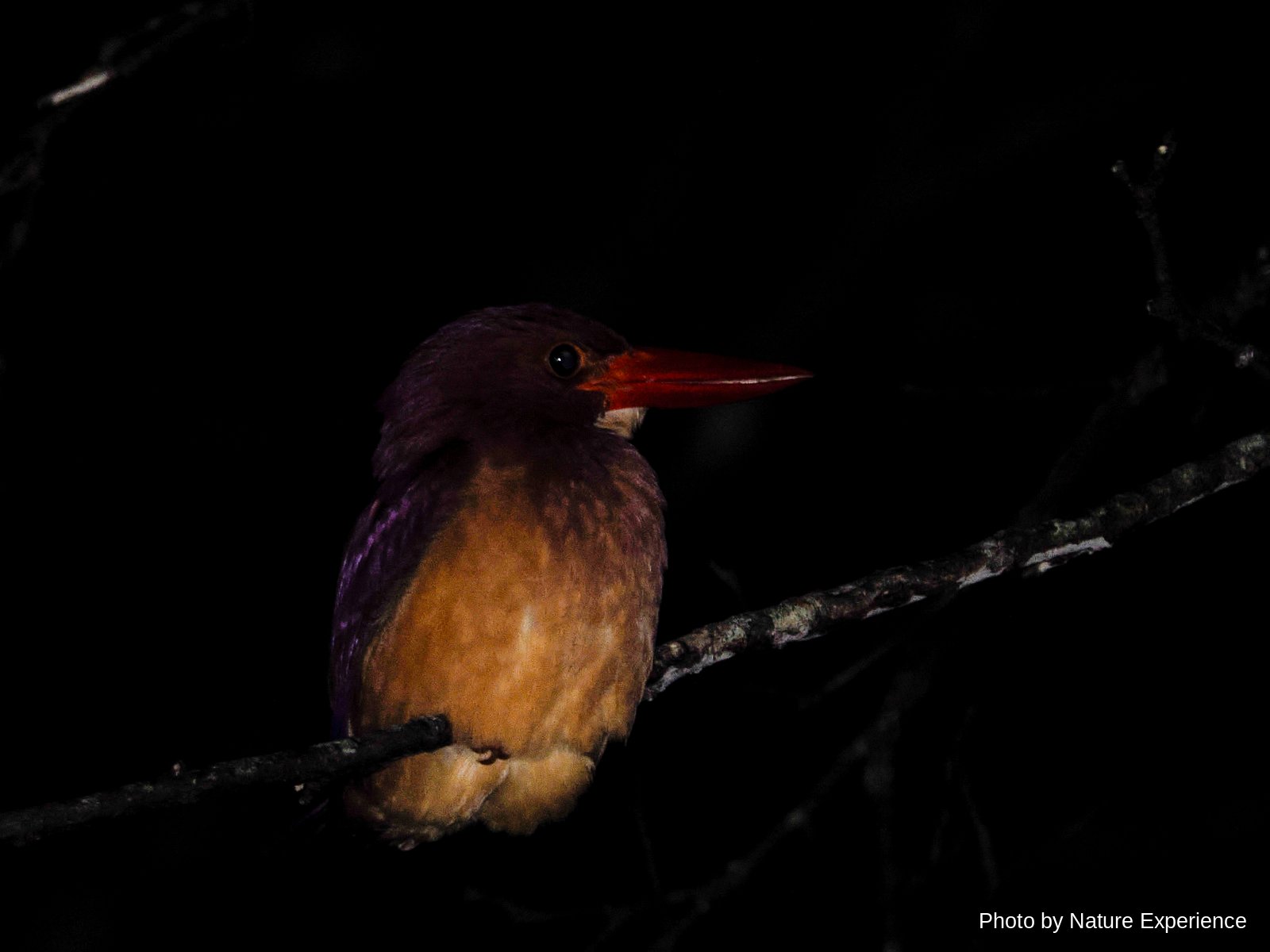
About 27 cm long, its whole body a glossy reddish-brown, with a pale-blue patch on the rump that stands out clearly in flight. Locally on Amami Oshima it is also known as "Kukkaru," and is loved for its far-carrying "kyororororo" call. It is a summer migrant that arrives from its Southeast Asian wintering grounds around the end of April, near Japan's Golden Week holidays, and heads south again by around September. Despite belonging to the kingfisher family, it eats relatively little fish, preying widely on crabs, frogs, lizards, and insects of the forest. During the breeding season from June to July it lays around five eggs in a tree hollow or an old woodpecker nest, and the chicks fledge around July. Parent birds become especially nervous during this period; approaching the nest tree, making noise, or using flash photography can cause them to abandon the nest or force the chicks to fledge early, so it is best to watch quietly from a distance and for only a short time.
Wildlife you can observe―― Owls ――
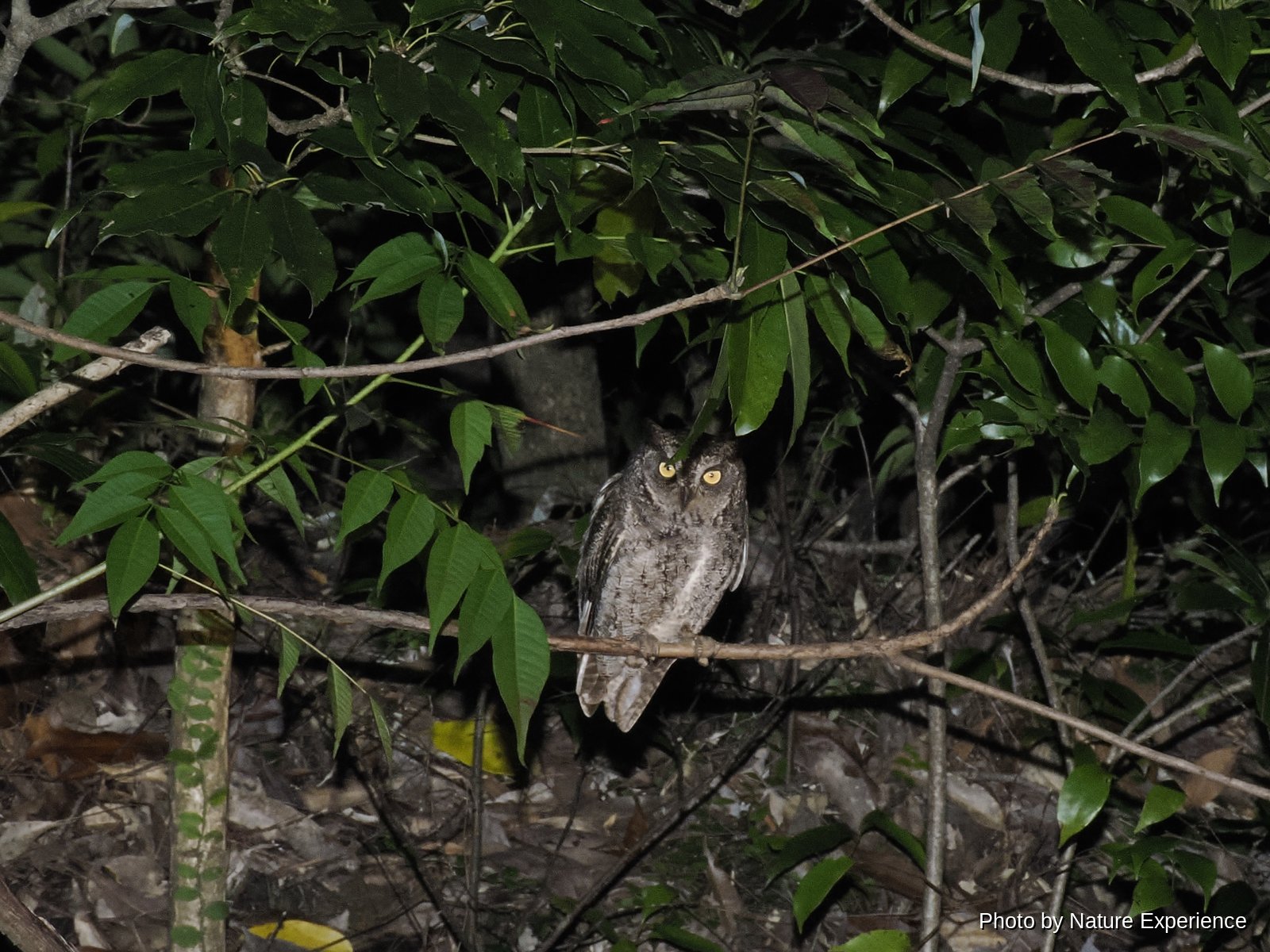
About 22 cm long, one of the smallest owls found in Japan. The whole body is brown with fine, moth-eaten-looking mottling. It is a year-round resident found from Amami Oshima southward through the Ryukyu Islands, occurring not only in mature forest but also in woodland near houses. Nocturnal, after sunset it repeats a low "koho, koho" call, and the female sometimes answers with a "nya." It preys on insects, spiders, and geckos. It nests in tree hollows, old woodpecker holes, or among the fronds of bird's-nest fern, and lays 4-5 eggs during the breeding season from April to around July. Only the female incubates, but both parents share the work of feeding the chicks, and most fledge around July. Around the time of fledging, chicks are still unsteady in flight and may be found perched on branches close to the ground; rather than picking them up or shining a light on them for long periods, it is best to quietly leave the area. The call itself can be heard year-round, not only during the breeding season.
IUCN Red List: Near Threatened (NT)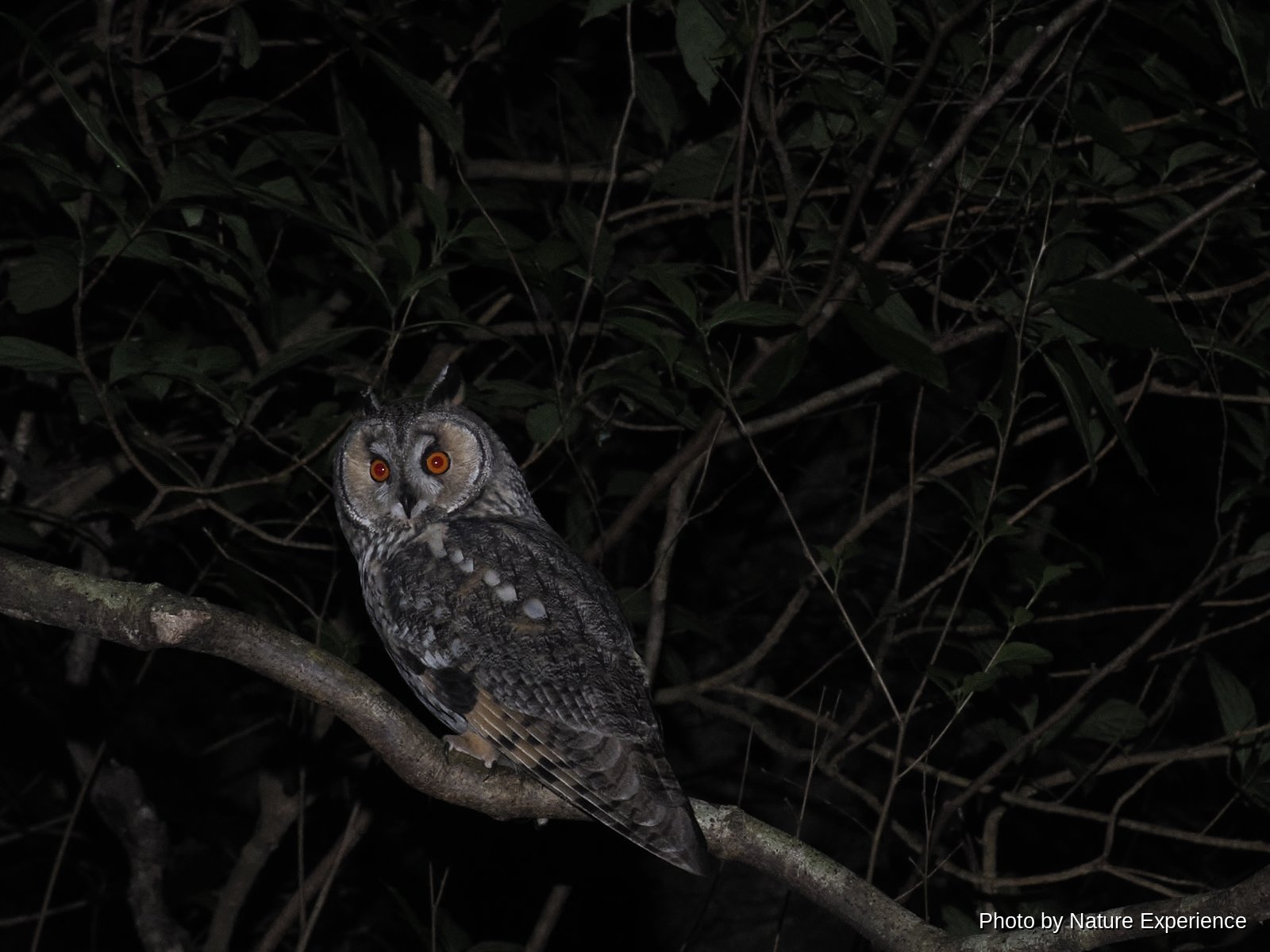
About 35-40 cm long, an owl notable for the long, ear-like tufts of feathers on its head. The upperparts are grayish to pale brown with streaking, and the eyes are orange. It breeds as a summer visitor in Hokkaido and northern Honshu, but from central Honshu southward it occurs mainly as a winter visitor. The only owls resident year-round on Amami Oshima are the Ryukyu Scops Owl and the Ryukyu Brown Hawk-Owl; aside from these, a small number of Long-eared Owls arrive as winter visitors each year, typically appearing from around November. Outside the breeding season it is known to form communal roosts, gathering in groups in evergreen trees or bamboo thickets. It preys mainly on small mammals such as rodents, as well as insects and small birds. Few individuals reach Amami Oshima, and because they are quite wary, they can be difficult to observe.
Wildlife you can observe―― Hawks ――
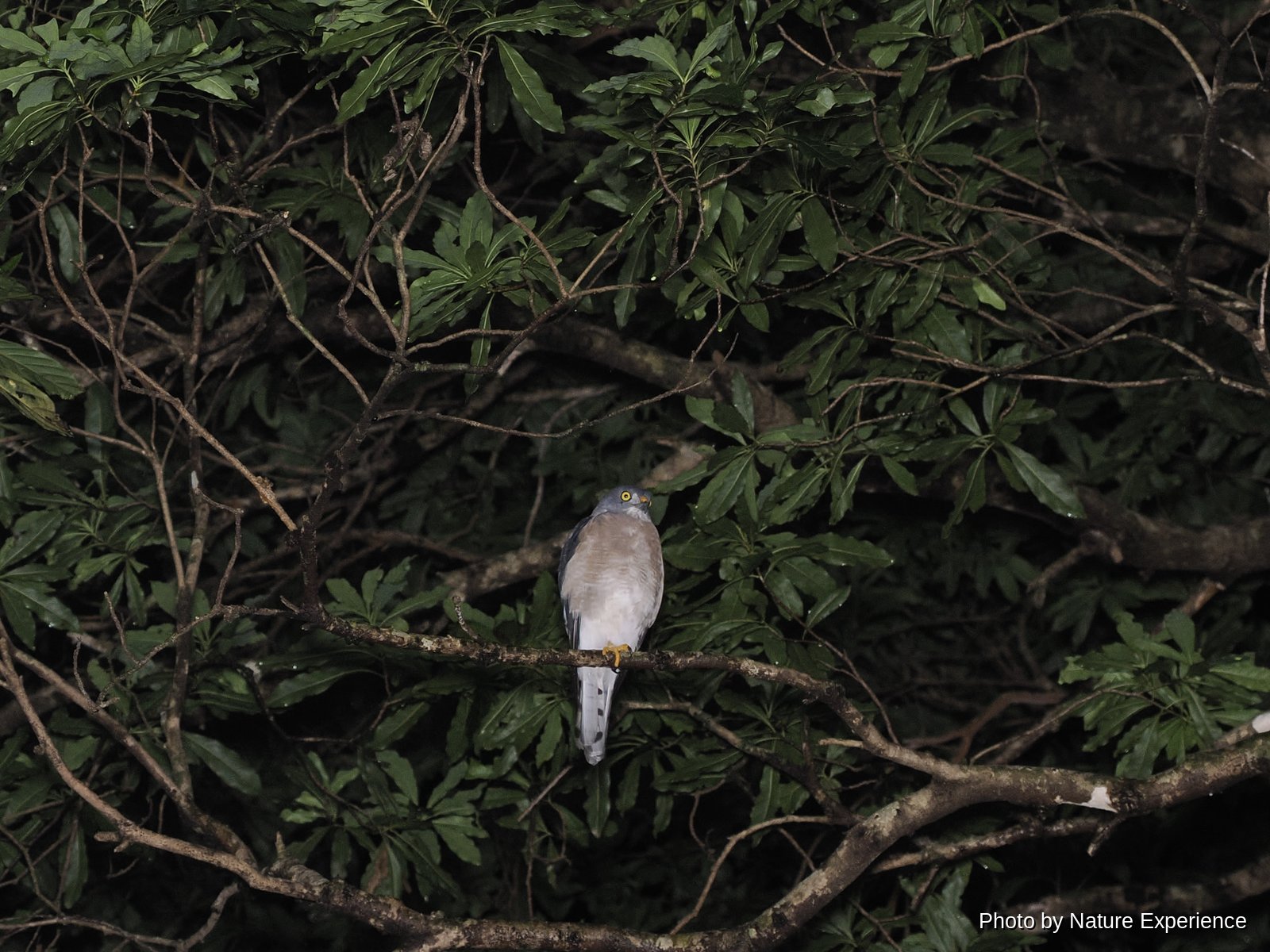
A small hawk about 30 cm long that does not breed in Japan, passing through only in spring and autumn as a migrant. The upperparts are dark bluish-gray and the underparts pale orange-brown, with reddish-brown eyes in males and yellow eyes in females. It breeds from northeastern China through the Korean Peninsula and winters in Southeast Asia. Spring passage also occurs, but Amami Oshima sees its largest numbers in autumn, when the passage peaks from mid-September through October as cicadas and dragonflies that serve as prey become abundant; flocks can sometimes be seen circling upward together on rising air currents in what is called a "hawk pillar." It preys widely on small animals such as frogs, insects, and lizards. It is listed as Least Concern on the IUCN Red List and is not subject to designation under Japan's Ministry of the Environment Red List or Act on Conservation of Endangered Species.
Wildlife you can observe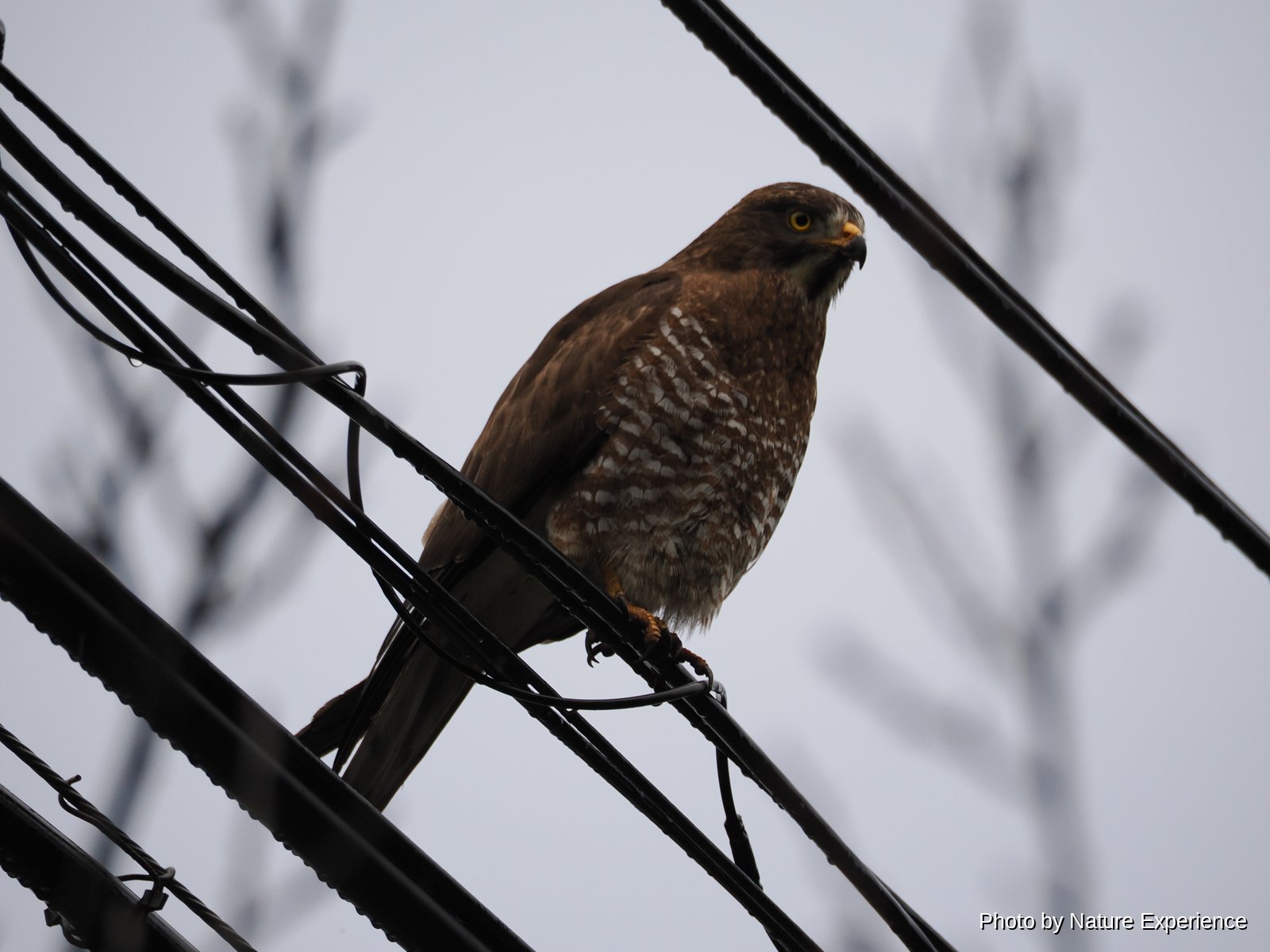
Males are about 47 cm long and females about 51 cm, with a wingspan of 105-115 cm; a medium-sized hawk. The head is grayish-brown, the upperparts and breast are brown, and the throat is white with a black central streak. It preys mainly on small animals such as snakes, lizards, and frogs, as well as insects like cicadas and grasshoppers. It breeds in Kyushu and northward through Honshu and Shikoku, and once breeding is finished, birds migrate south from early September through the Nansei Islands toward Southeast Asia. Amami Oshima is known as Japan's largest wintering ground for the species, with the passage peaking around mid-October, when large numbers of birds can be seen circling and rising together in what is called a "hawk pillar." Many birds do not complete the journey south and instead winter on the island; an estimated 2,000 or so stay from November through around March. It is listed as Vulnerable on the Ministry of the Environment's Red List and on Appendix II of CITES. Around the forests used as roosts, avoid loud noises, sudden movements, and flash photography that could startle the birds into unnecessary flight, and observe quietly from a distance.
Ministry of the Environment Red List: Vulnerable (VU)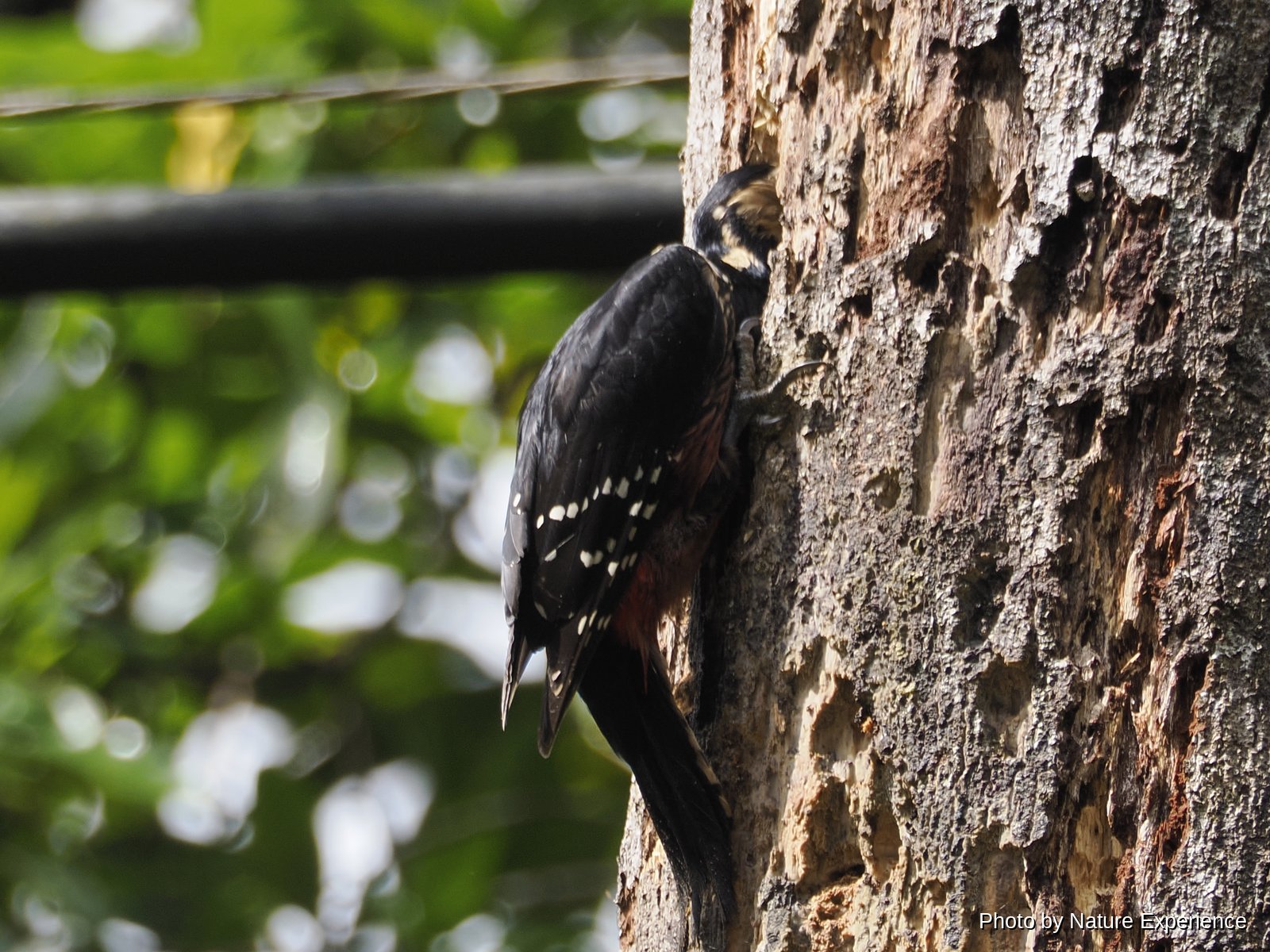
―― Shorebirds (Sandpipers & Plovers) ――
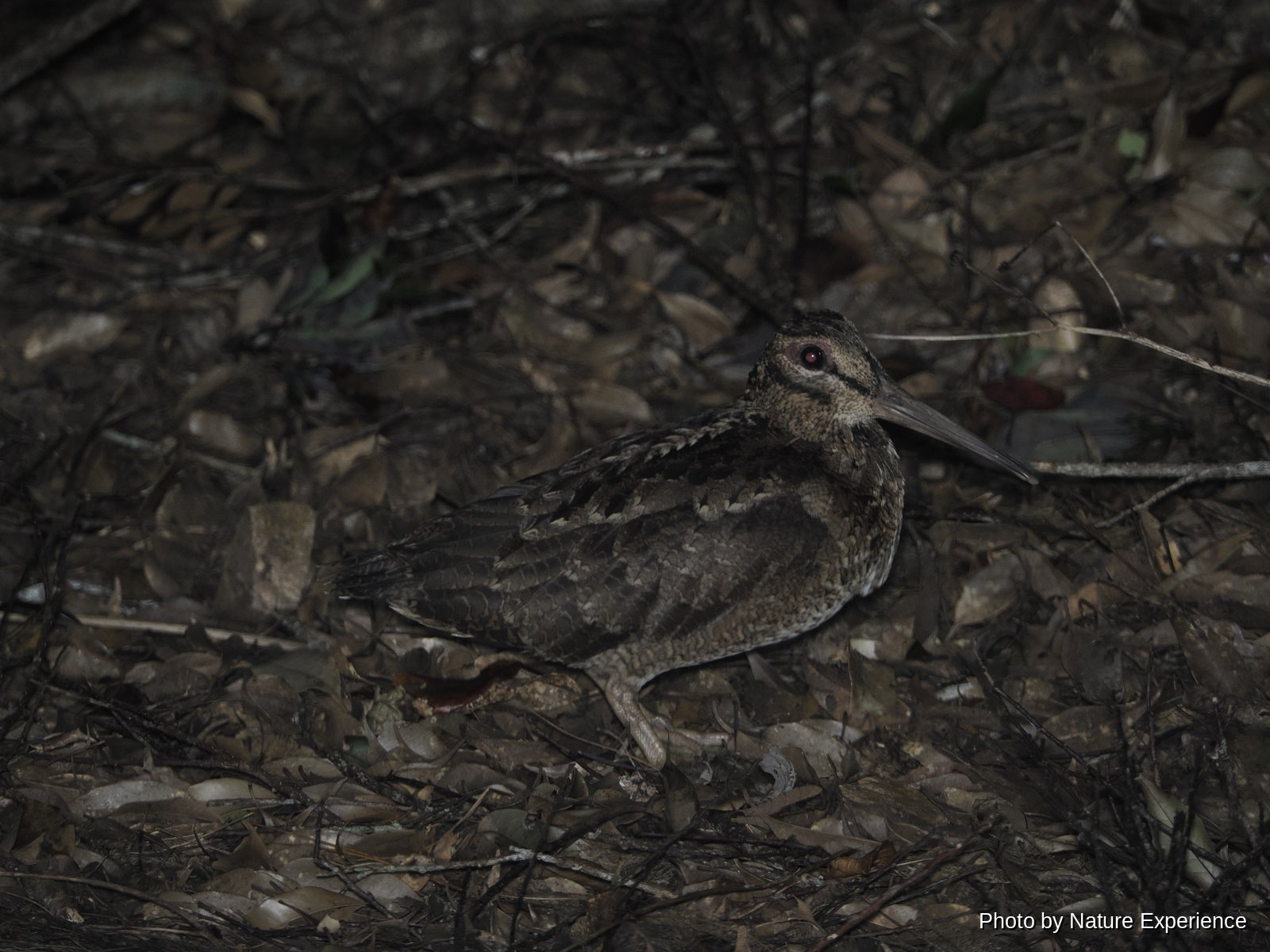
About 35-36 cm long. A species endemic to Japan found only in the Amami and Okinawa island groups, with breeding confirmed on Amami Oshima, Kakeromajima, Uke-jima, Yoro-jima, and Tokunoshima. It resembles the closely related Eurasian woodcock but has longer legs, an overall blacker tone, and a stockier build than other sandpipers. It prefers the dim forest floor of evergreen broadleaf forest, is most active from dusk to dawn, and forages on the ground for earthworms and insects. It becomes especially active in the dim light of early morning and evening, and on moonlit nights. The breeding season runs from around February to May, and at dusk males perform a courtship and territorial "roding" display flight, making this the easiest time of year to spot one. It nests on the ground within forests and lays 2-4 eggs from around March through May. Designated a Nationally Rare Wild Species in 1993. Following the eradication of the small Indian mongoose and forest recovery as logging has declined, its population has been gradually recovering, and in March 2026 the Ministry of the Environment's 5th Red List downgraded its status from Vulnerable (VU) to Near Threatened (NT). Predation by feral cats remains an ongoing concern.
Capture and transfer prohibited (Nationally Rare Wild Species)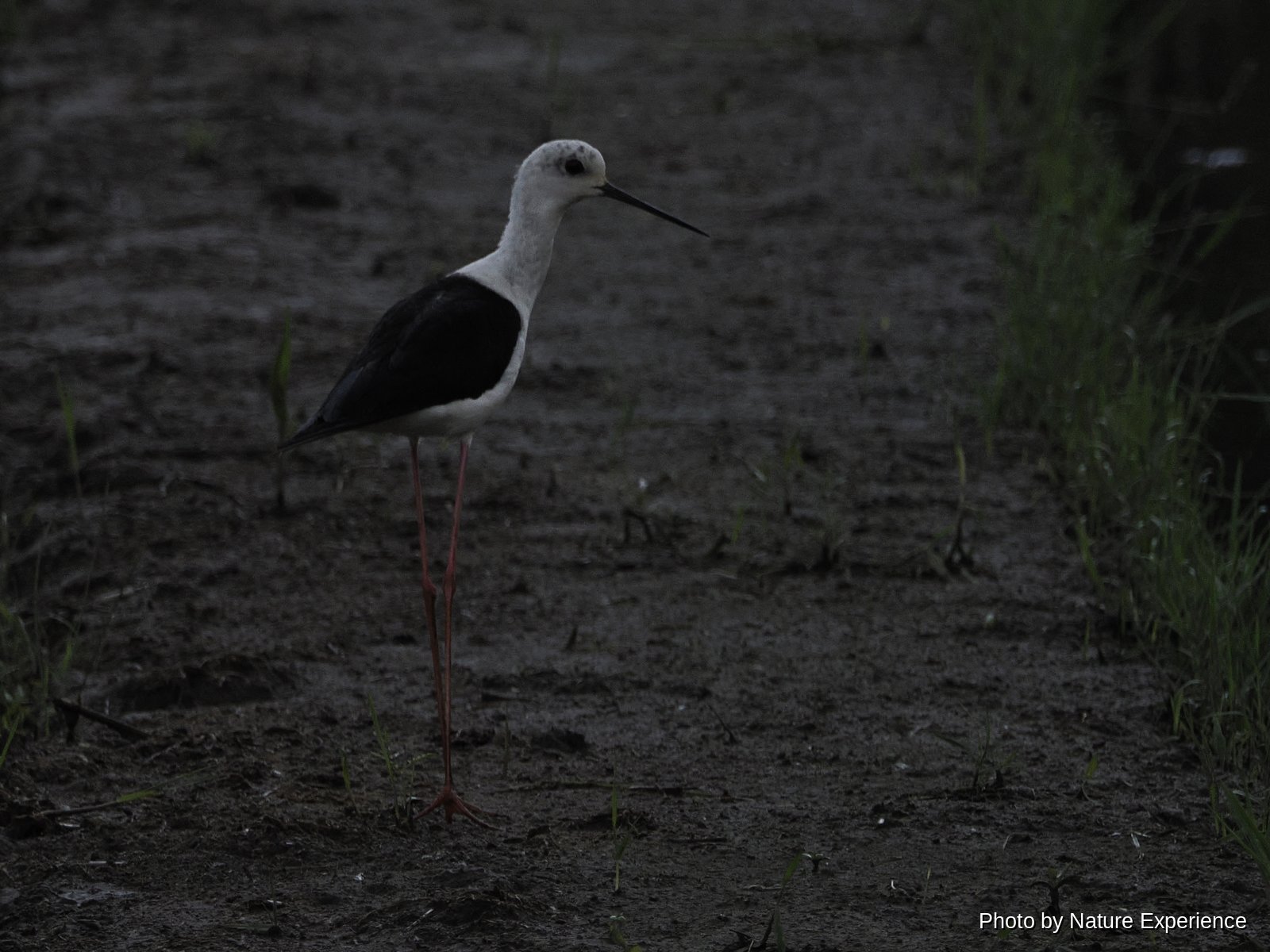
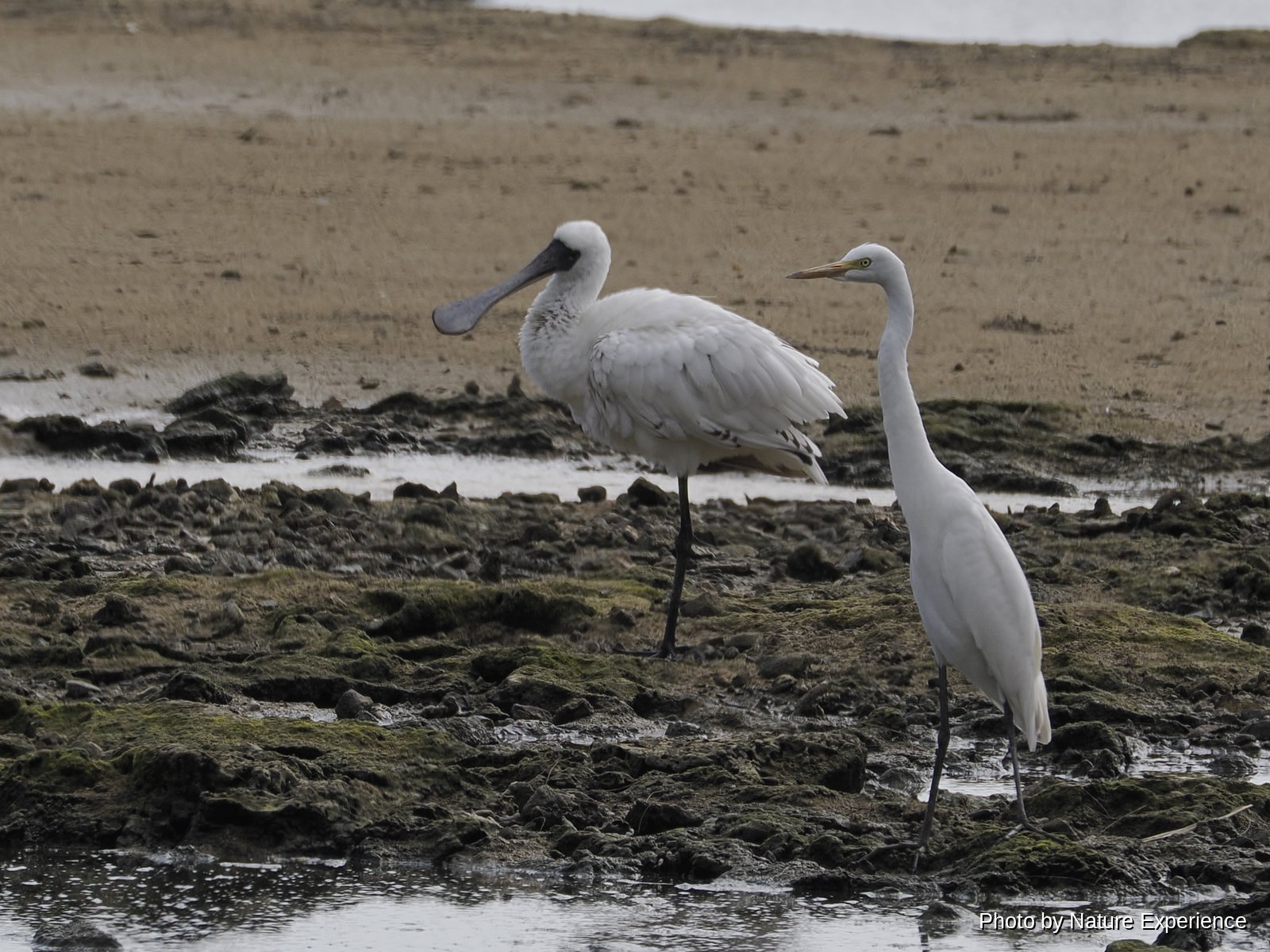
About 37-40 cm long, a shorebird with extremely long, reddish legs and a thin black bill. The body is white with black wings and back; males show more black extending to the back of the head, while females are paler. It feeds on aquatic insects, crustaceans, shellfish, and small fish. In Japan it was first confirmed breeding at reclaimed land in Aichi Prefecture in 1975 and has since become locally established in parts of Honshu, but in the Nansei Islands it occurs mainly as a passage migrant and winter visitor. Within Kagoshima Prefecture it has been recorded on Amami Oshima, Tokunoshima, and Nakanoshima in the Tokara Islands, and breeding was confirmed on nearby Okinoerabujima in 2009, though there are few records of breeding on Amami Oshima itself, or of exactly when it arrives there. It favors shallow water such as tidal flats, rice paddies, and fallow fields. It was previously classified as Vulnerable (VU) on the Ministry of the Environment Red List but is now listed as Data Deficient (DD).
Ministry of the Environment Red List: Data Deficient (DD)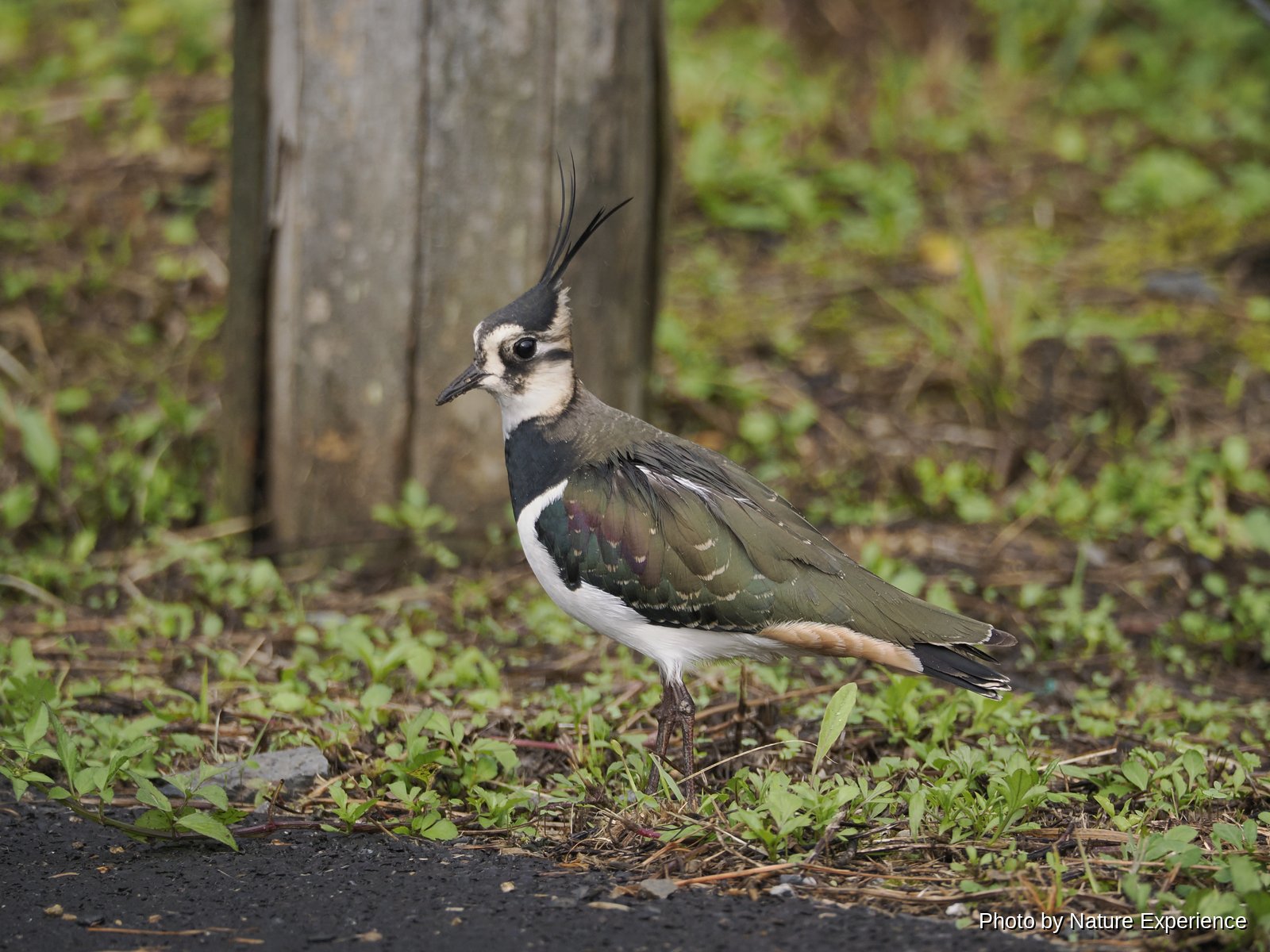
About 32 cm long, with a long crest on the head, a back with a glossy greenish-black sheen, and a white belly. Its elegant appearance has earned it the nickname "winter lady." It breeds across Eurasia and visits Japan as a winter migrant. On Amami Oshima it begins to appear in open farmland such as rice paddies and fields from around late October, staying through the winter until around late March or April of the following year. It moves in flocks, foraging in the soil for earthworms and insects. Unlike the creatures of the night forest that this site mainly features, it is a messenger of winter that is easy to observe by day in open farmland.
Wildlife you can observe