ABOUT
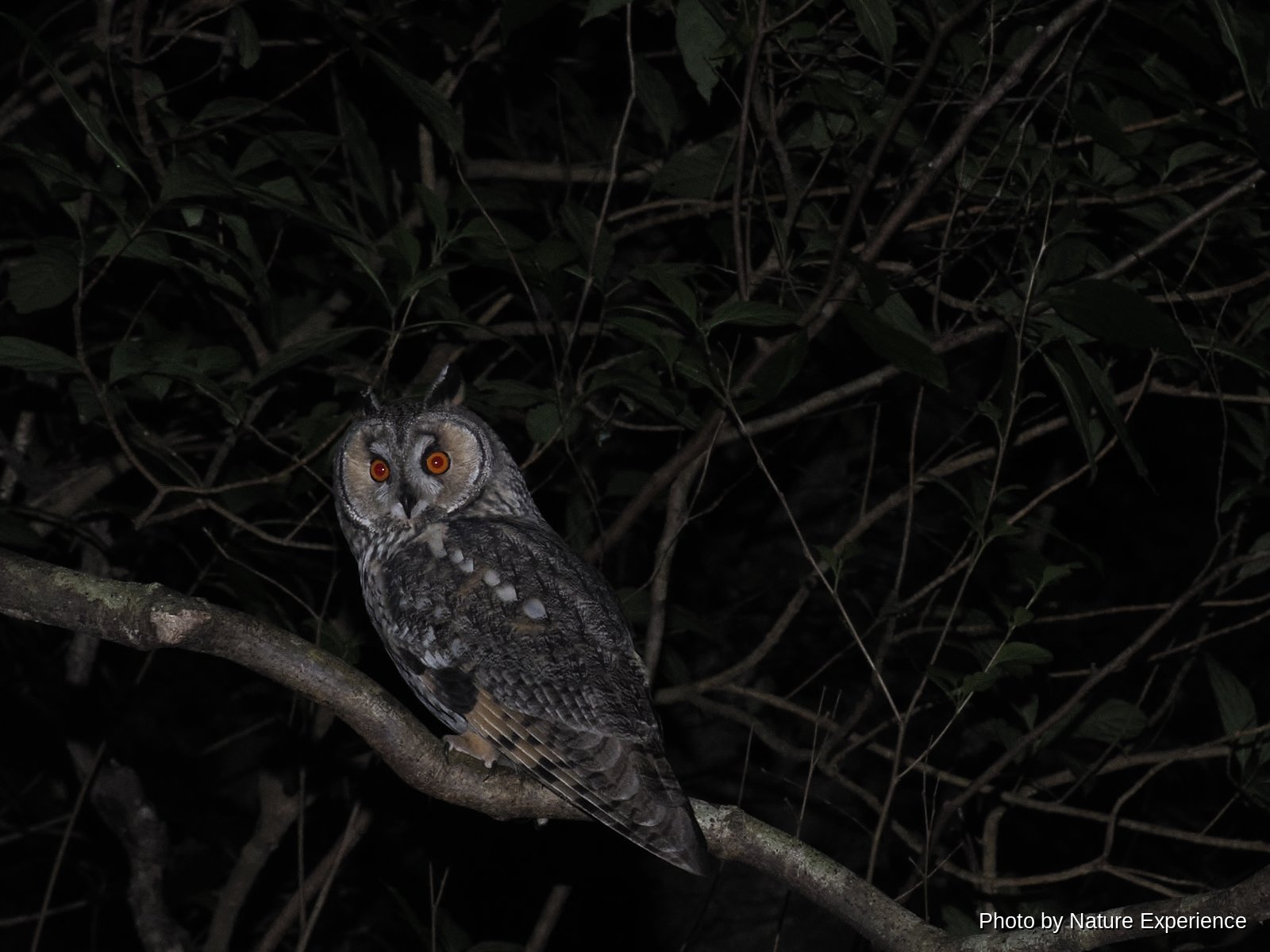
About Long-eared Owl
About 35-40 cm long, an owl notable for the long, ear-like tufts of feathers on its head. The upperparts are grayish to pale brown with streaking, and the eyes are orange. It breeds as a summer visitor in Hokkaido and northern Honshu, but from central Honshu southward it occurs mainly as a winter visitor. The only owls resident year-round on Amami Oshima are the Ryukyu Scops Owl and the Ryukyu Brown Hawk-Owl; aside from these, a small number of Long-eared Owls arrive as winter visitors each year, typically appearing from around November. Outside the breeding season it is known to form communal roosts, gathering in groups in evergreen trees or bamboo thickets. It preys mainly on small mammals such as rodents, as well as insects and small birds. Few individuals reach Amami Oshima, and because they are quite wary, they can be difficult to observe.
SAFETY
Observation Safety Notes
Please enjoy Amami's wildlife through photographs. Some species are protected by law or local ordinance, and capturing or removing them is prohibited. In special protection zones within the national park, collecting any wildlife is prohibited entirely. Please check the notes on this page, and confirm local rules before visiting any site.
Wild birds aren't something to catch and take home — they're best enjoyed by observing and photographing them without disturbing them. Keep a good distance, and avoid using playback calls or food to lure them in. Parent birds and chicks are especially sensitive while nesting or breeding; approaching too closely or making noise can cause the nest to be abandoned or the chicks to fail to fledge successfully. Avoid flash or strong lights when photographing at night, and don't share information online that could reveal a nest's exact location.