ABOUT
About Chinese Sparrowhawk
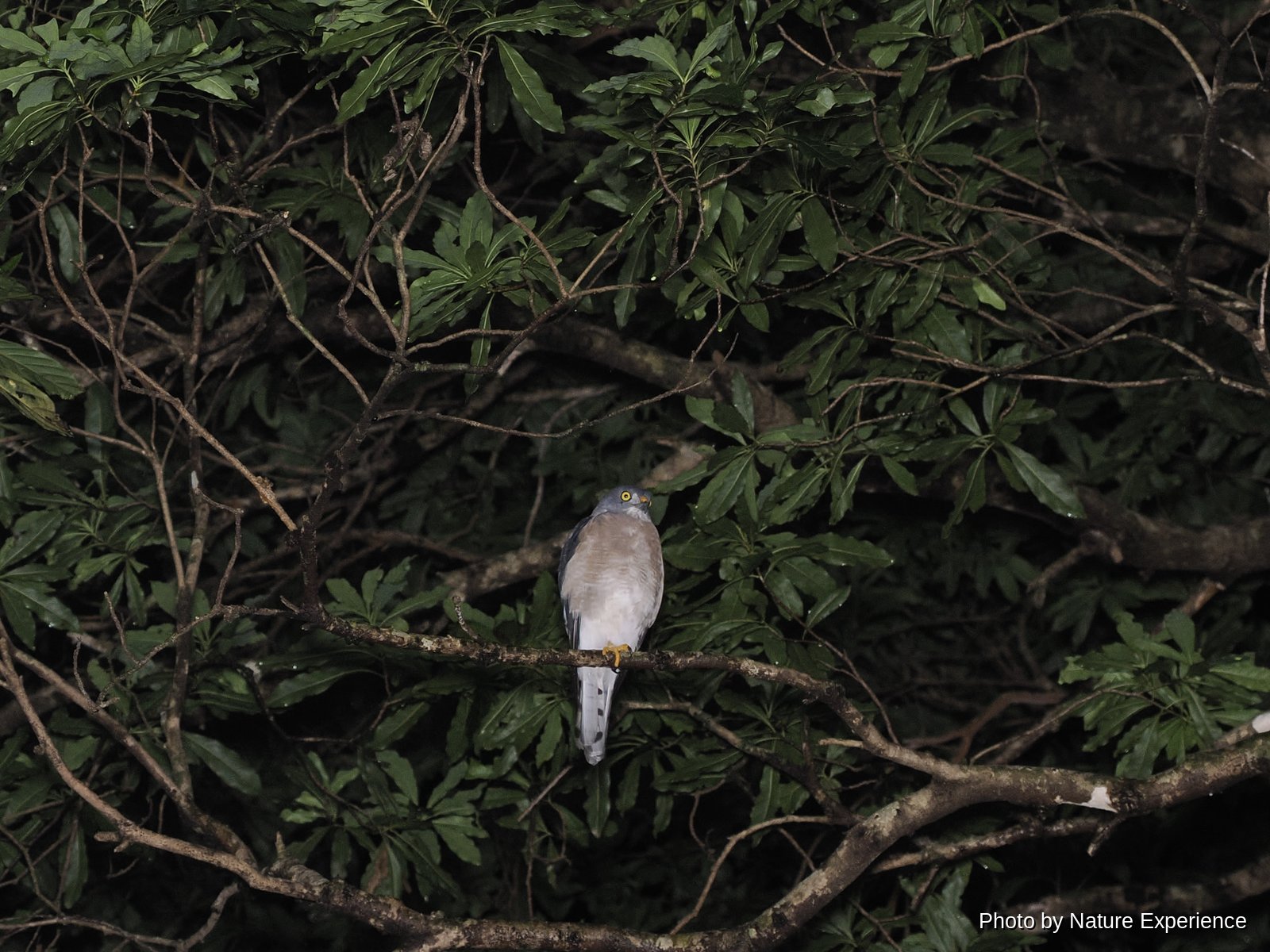
A small hawk about 30 cm long that does not breed in Japan, passing through only in spring and autumn as a migrant. The upperparts are dark bluish-gray and the underparts pale orange-brown, with reddish-brown eyes in males and yellow eyes in females. It breeds from northeastern China through the Korean Peninsula and winters in Southeast Asia. Spring passage also occurs, but Amami Oshima sees its largest numbers in autumn, when the passage peaks from mid-September through October as cicadas and dragonflies that serve as prey become abundant; flocks can sometimes be seen circling upward together on rising air currents in what is called a "hawk pillar." It preys widely on small animals such as frogs, insects, and lizards. It is listed as Least Concern on the IUCN Red List and is not subject to designation under Japan's Ministry of the Environment Red List or Act on Conservation of Endangered Species.
SAFETY
Observation Safety Notes
Please enjoy Amami's wildlife through photographs. Some species are protected by law or local ordinance, and capturing or removing them is prohibited. In special protection zones within the national park, collecting any wildlife is prohibited entirely. Please check the notes on this page, and confirm local rules before visiting any site.
Wild birds aren't something to catch and take home — they're best enjoyed by observing and photographing them without disturbing them. Keep a good distance, and avoid using playback calls or food to lure them in. Parent birds and chicks are especially sensitive while nesting or breeding; approaching too closely or making noise can cause the nest to be abandoned or the chicks to fail to fledge successfully. Avoid flash or strong lights when photographing at night, and don't share information online that could reveal a nest's exact location.