Insects
―― Butterflies ――
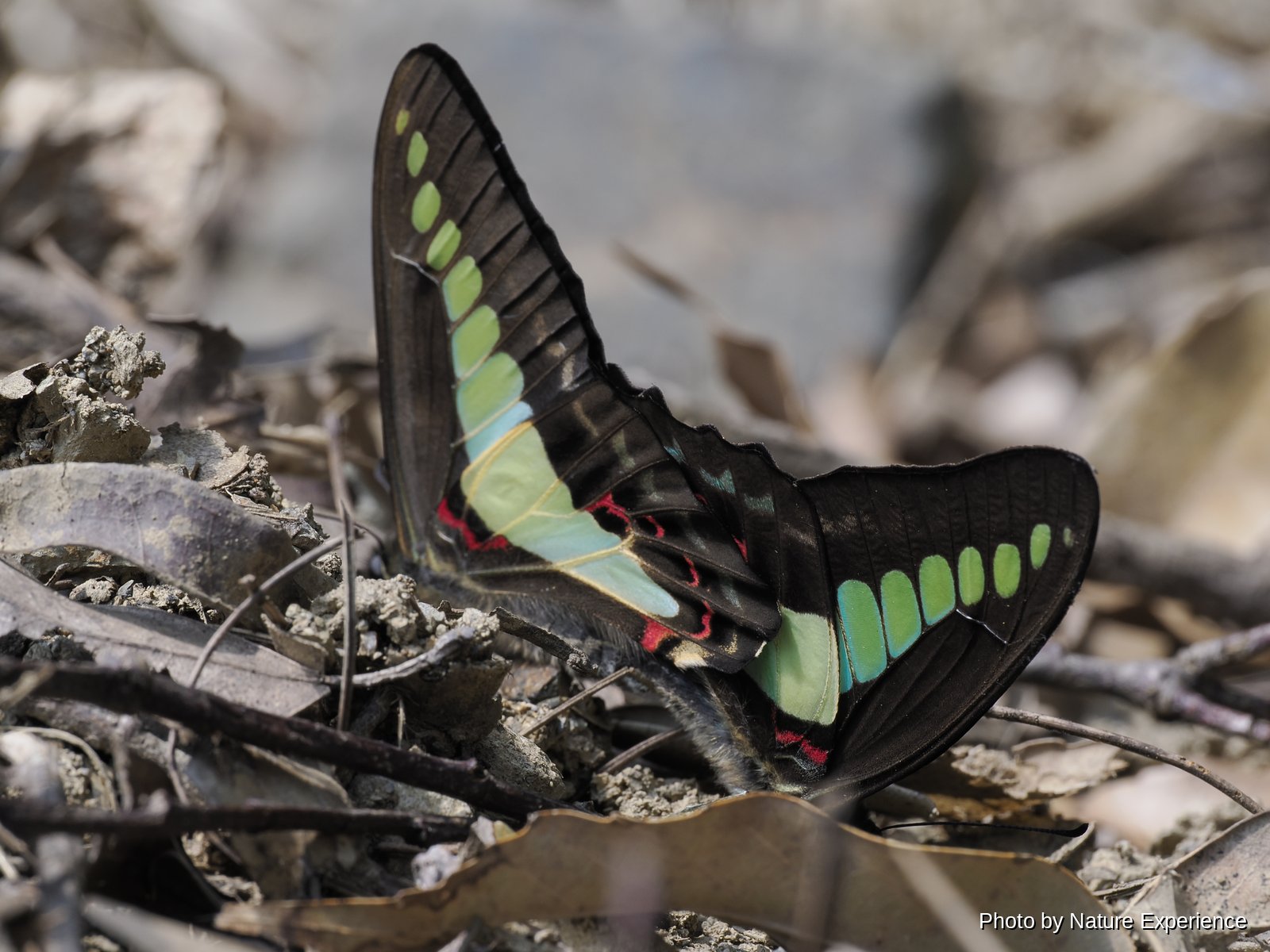
A fast-flying, striking swallowtail with a band of blue-green running across both wings on an otherwise black background. It feeds on camphor-family trees such as camphor and machilus, and is seen island-wide on Amami Oshima. With several generations a year, it remains on the wing for a long stretch of the warmer months.
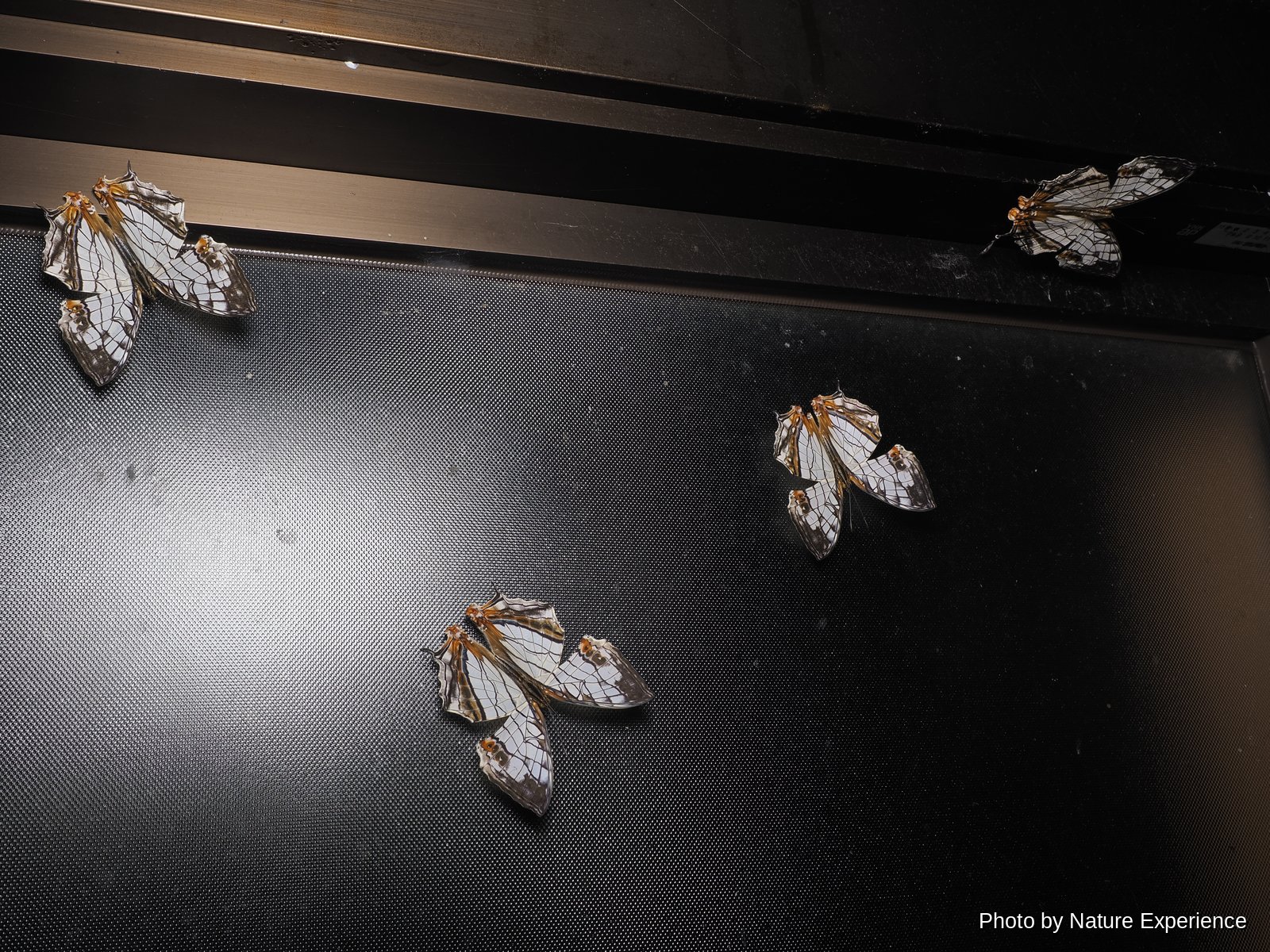
A butterfly with truly distinctive wings — a white ground crossed by a dark brown, tortoiseshell-like pattern. Found from the Kii Peninsula westward through the Nansei Islands, including Amami Oshima. Larvae feed on fig-family plants such as Ficus erecta and banyan. It overwinters as an adult and produces repeated generations from spring into late autumn during the warmer months.
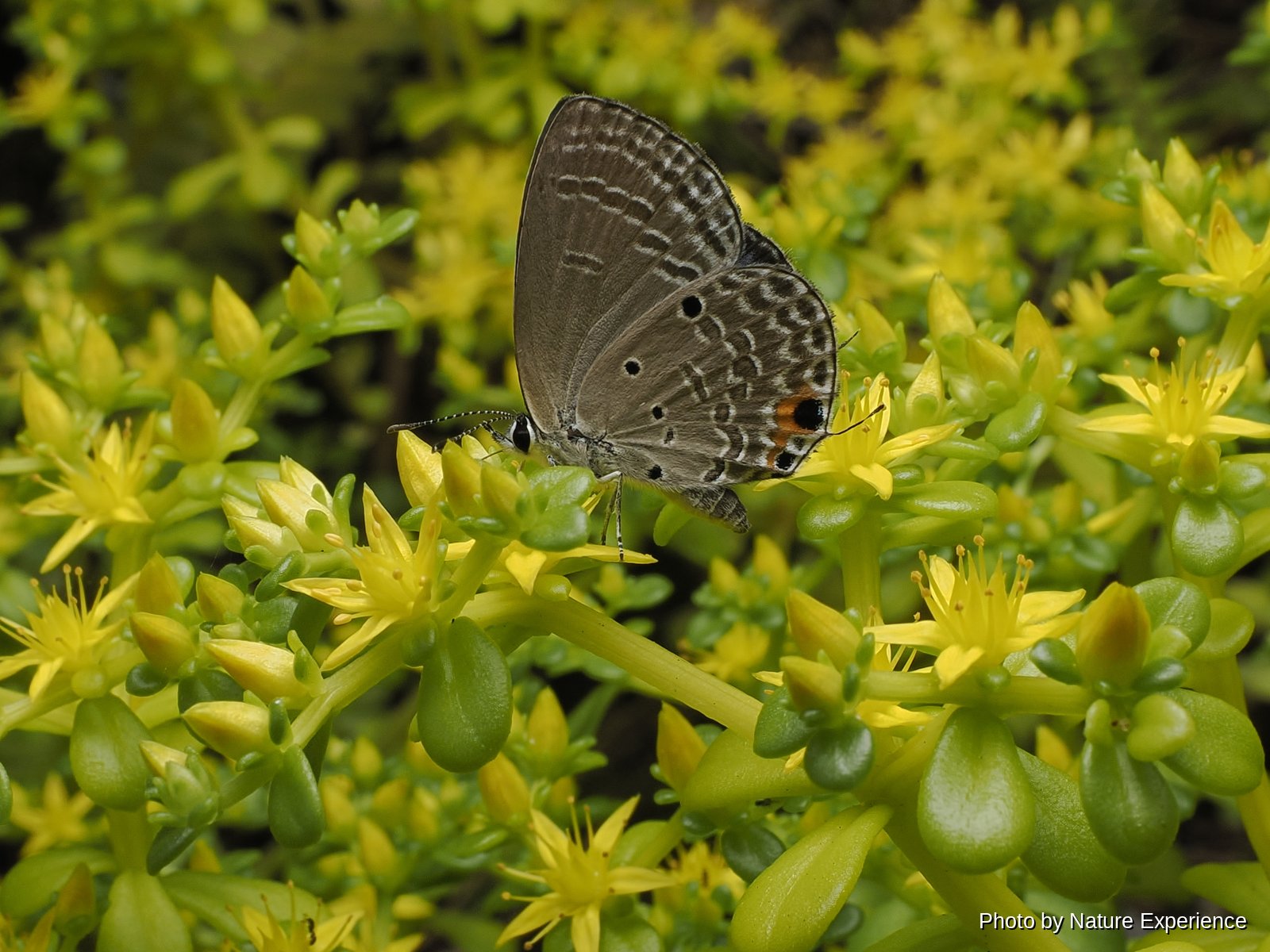
A small blue butterfly whose upper wings are bluish purple, and whose undersides are grayish brown with rows of white lines and black spots. It is distributed in Taiwan, Southeast Asia, and elsewhere; in Japan it spread from the 2000s onward through the Nansei Islands and then into Kyushu and Honshu. It arrived on Amami Oshima in 2007 and became established, and because its larvae feed on the young leaves of cycads, cycads across the island suffered heavy damage. Adults are most often seen from June to around November.
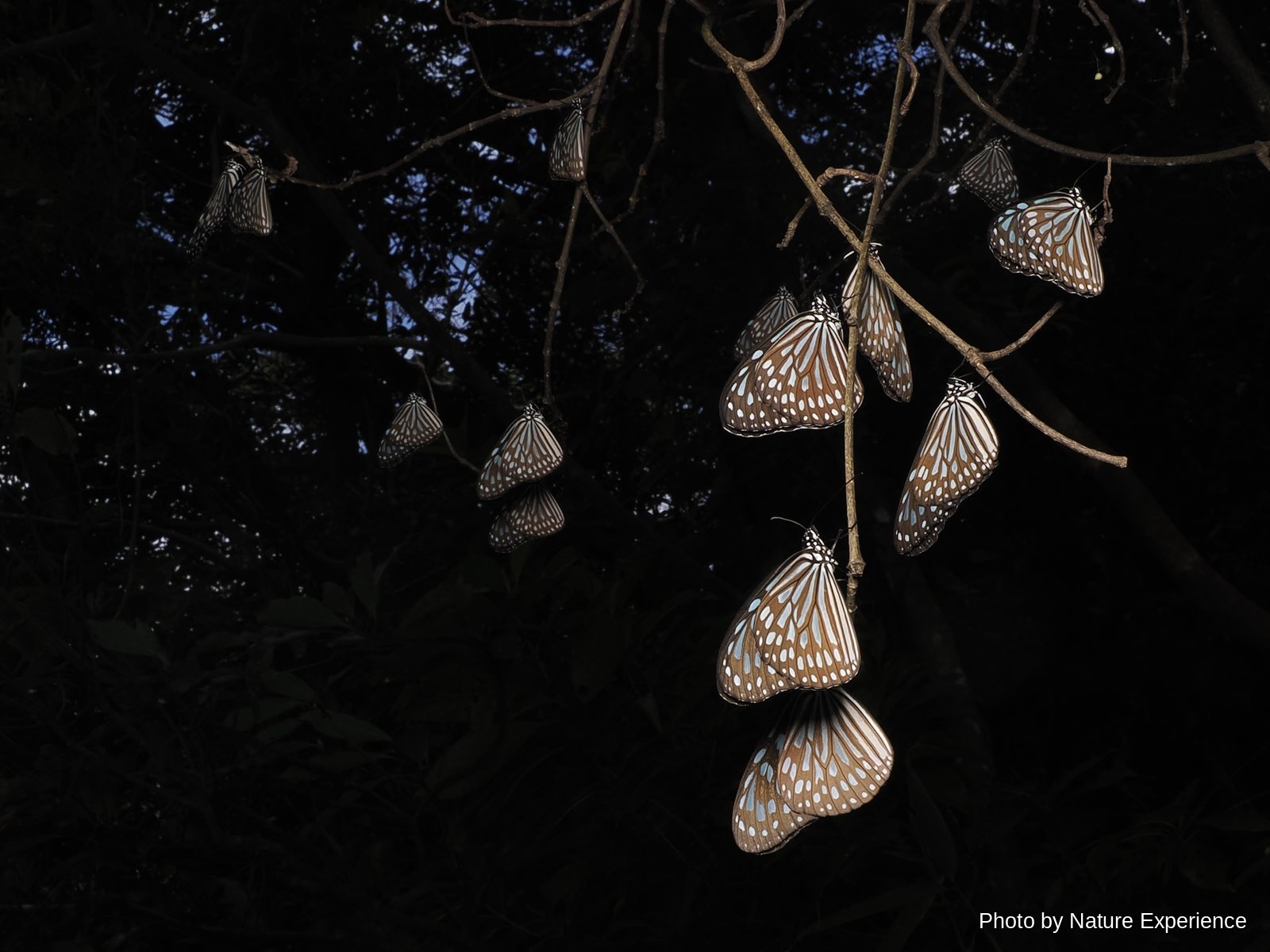
A milkweed butterfly with pale blue markings, gliding gracefully and unhurriedly through the air. Found from Amami Oshima southward, its larvae feed on Marsdenia tinctoria. On winter days when the temperature drops below 15°C, hundreds can be seen clustering together to overwinter in the forests of the island's valleys — a well-known winter scene on Amami Oshima.
―― Dragonflies ――
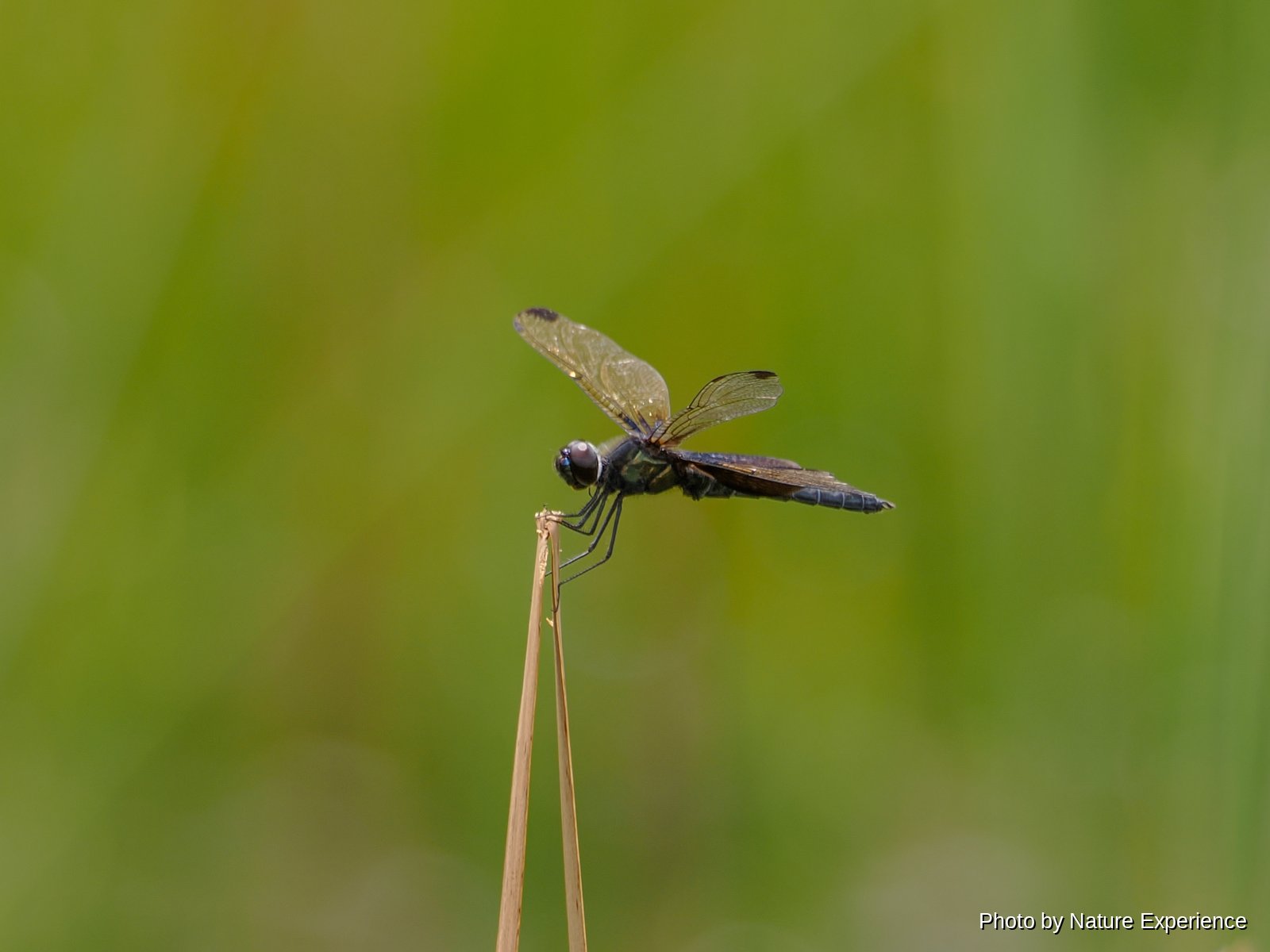
A rare dragonfly confirmed in Japan only on Amami Oshima. Its body is black with a deep green sheen, and its clear wings carry indigo markings. It favors ponds thick with emergent vegetation, where males patrol low over the water waiting for females. Because its habitat and population are extremely limited, it is designated a Nationally Rare Species of Wild Fauna and Flora under Japan's Act on Conservation of Endangered Species, and capture is prohibited.
Collecting prohibited (Act on Conservation of Endangered Species, Nationally Rare Species of Wild Fauna and Flora), Ministry of the Environment Red List: Endangered (EN)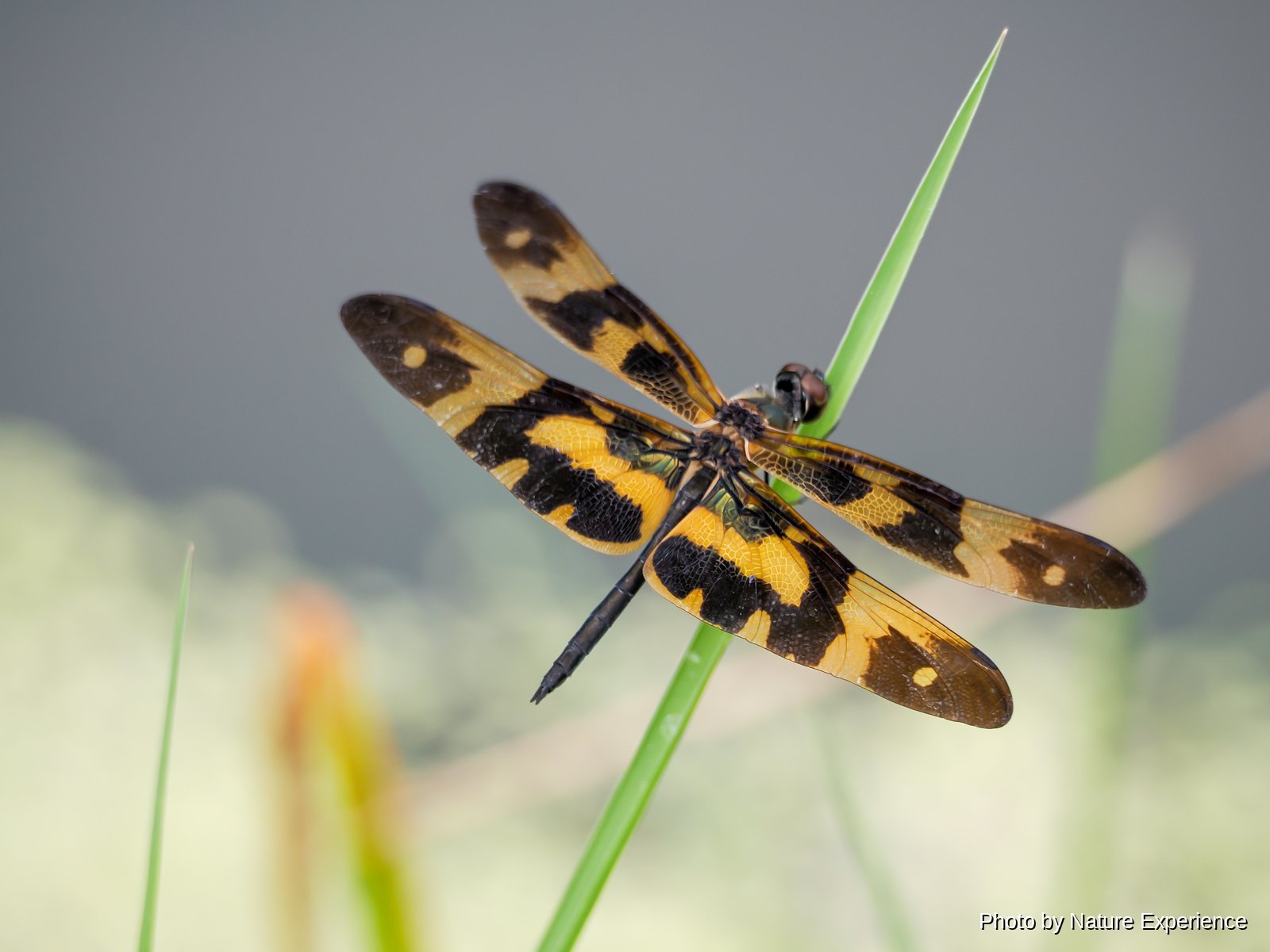
A subspecies of the Variegated Flutterer found across the Nansei Islands, seen widely from Amami Oshima through Okinawa, Miyako, and the Yaeyama Islands. About 40mm long, with dark brown wing markings that vary considerably in size and shape between individuals. Fluttering around ponds and rice paddies, it flies with a butterfly-like, flitting motion.
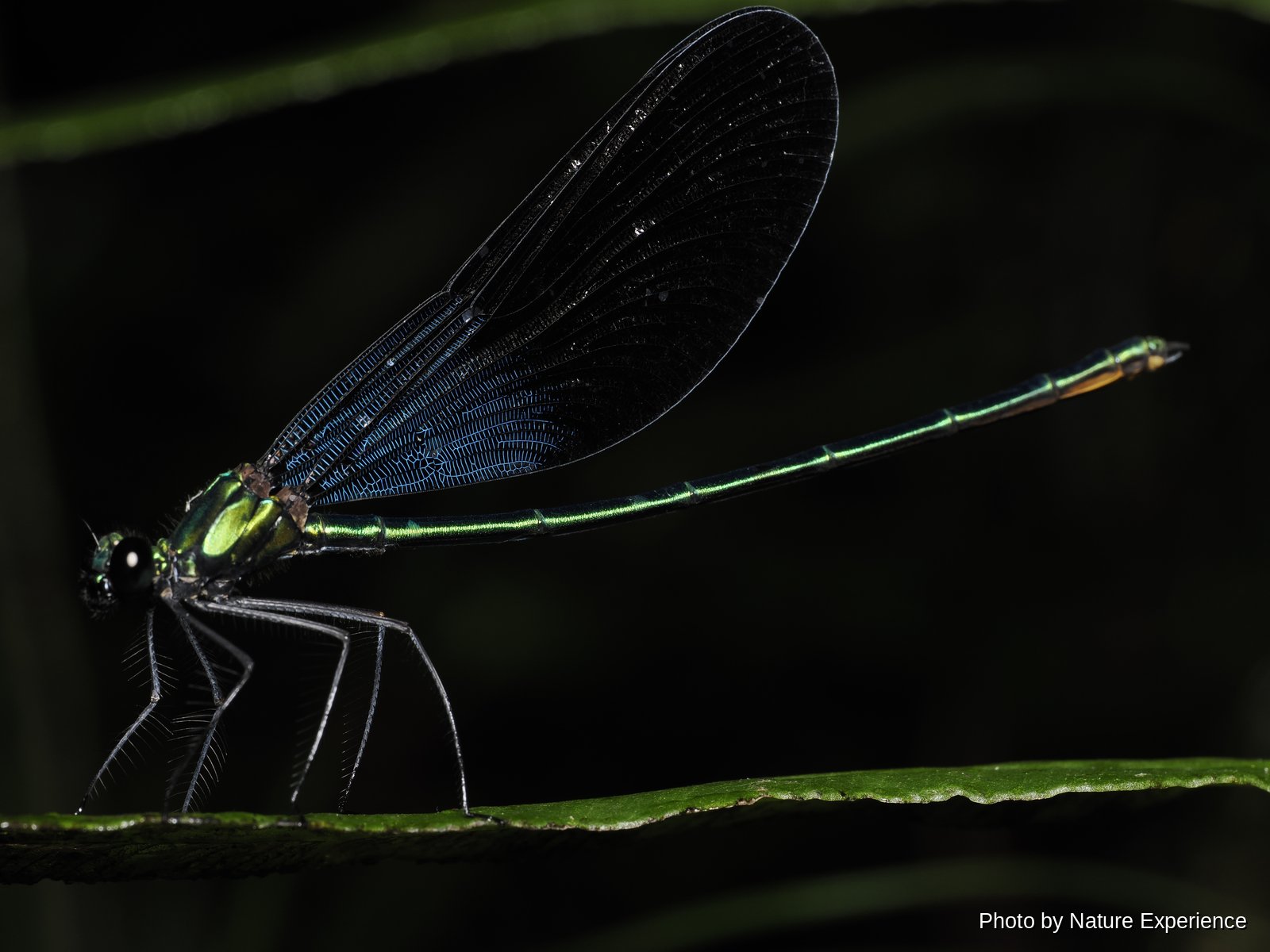
Body length about 65mm. Distributed on Amami Oshima, Tokunoshima, and Okinawa Island, it lives along the upper to middle reaches of dim mountain streams surrounded by forest. Its body has a blue-green metallic sheen, and its black wings shine blue depending on the light. On Amami Oshima individuals, the blue-shining area of the wings is wider than on those from Okinawa Island. Adults can be seen over a long period, from late February to around December.
―― Crickets, Katydids & Grasshoppers ――
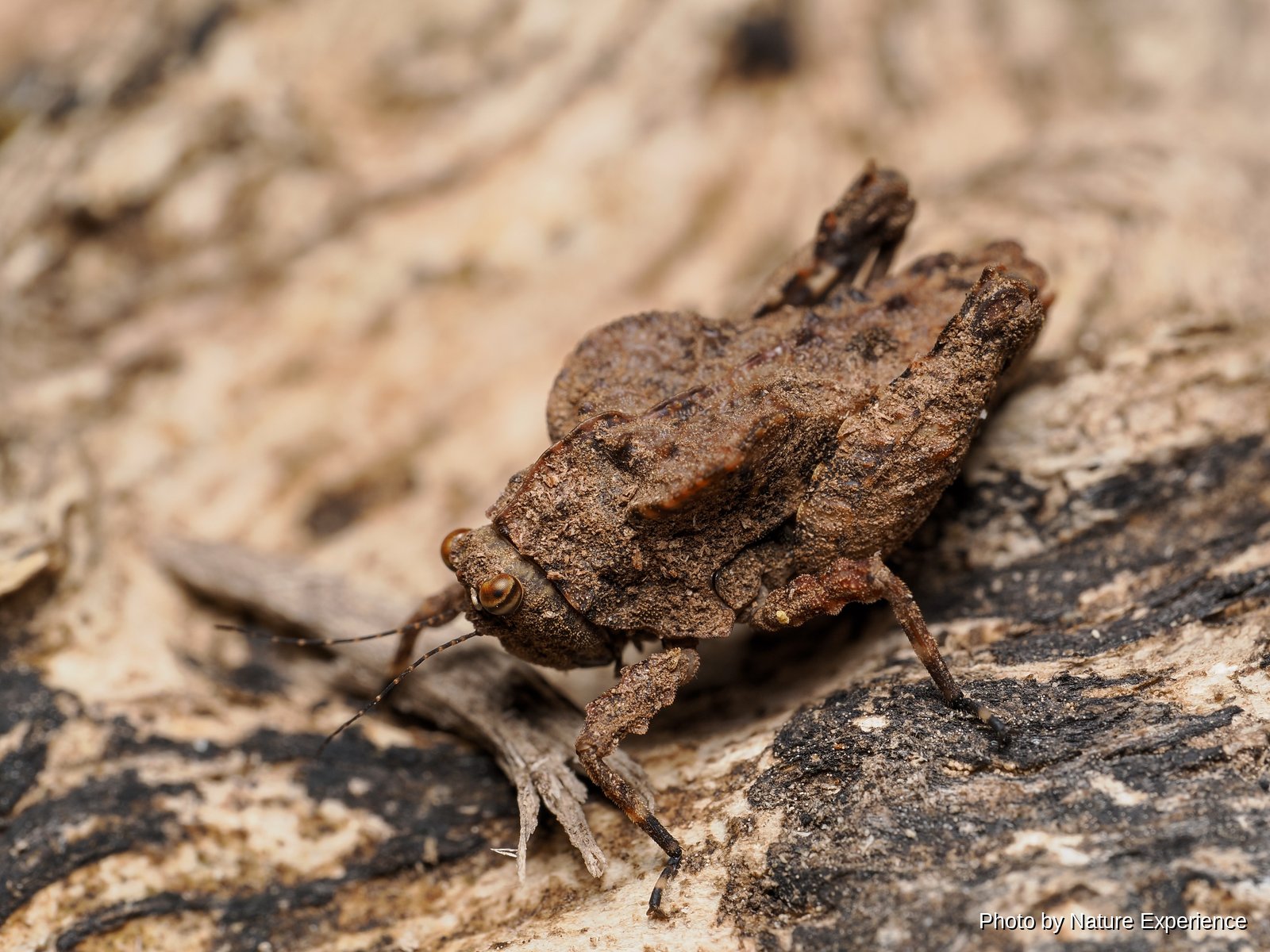
A species endemic to Japan, found on Amami Oshima and Tokunoshima. Body length is about 10mm in males and about 14.5mm in females. Its flattened, broadly spread pronotum is distinctive, and it lives on the leaf-littered forest floor, camouflaged to match its surroundings. It moves quickly and leaps away when startled.
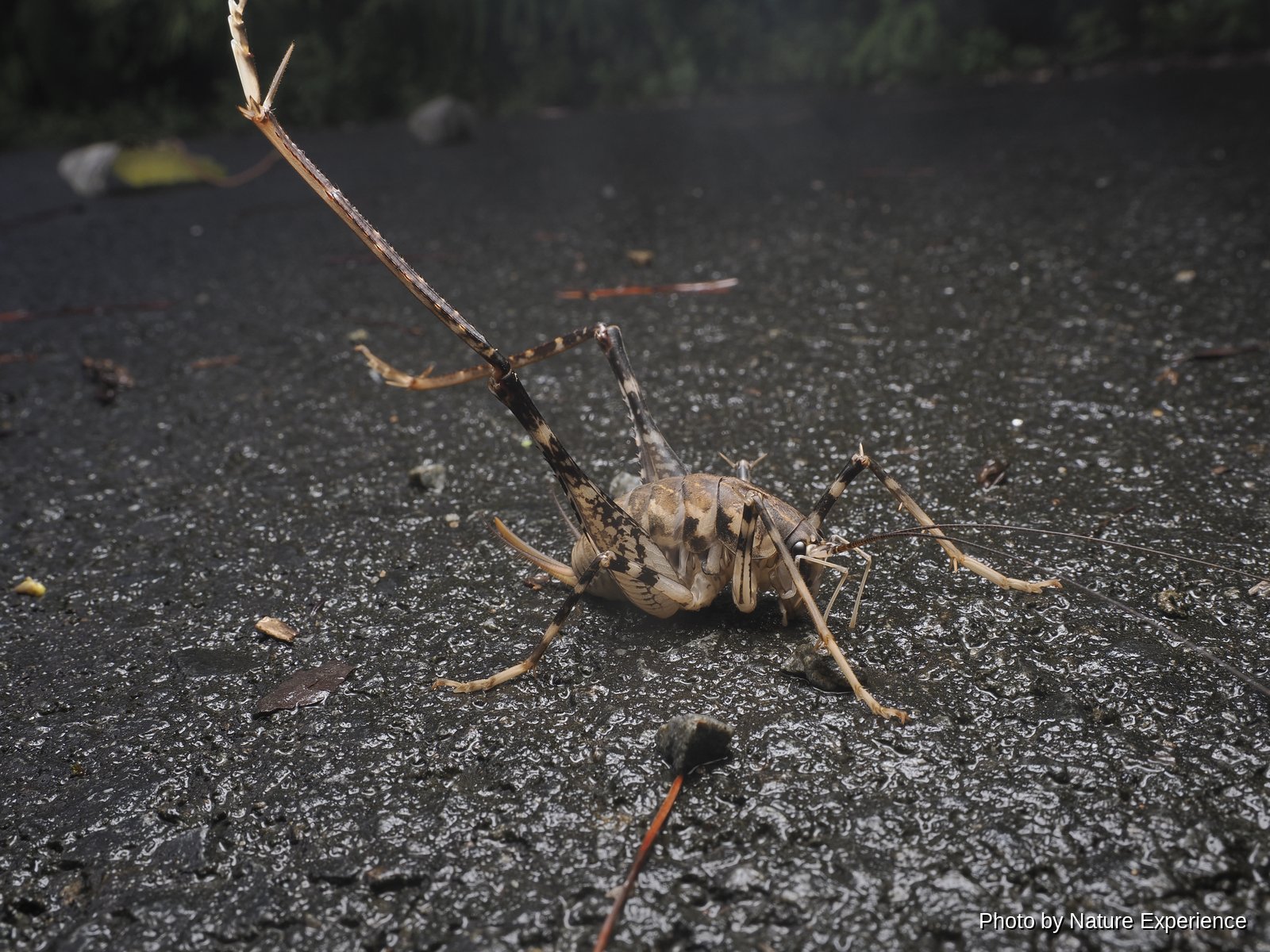
A spotted camel cricket found on Amami Oshima and Tokunoshima. It is larger than the mainland spotted camel cricket (body length 20-34mm), and its mottled pattern is indistinct. It has no wings, and has long antennae and well-developed hind legs. Rather than walking around, it usually moves in small hops. It can be seen in the forest at night, and adults appear from summer to autumn.
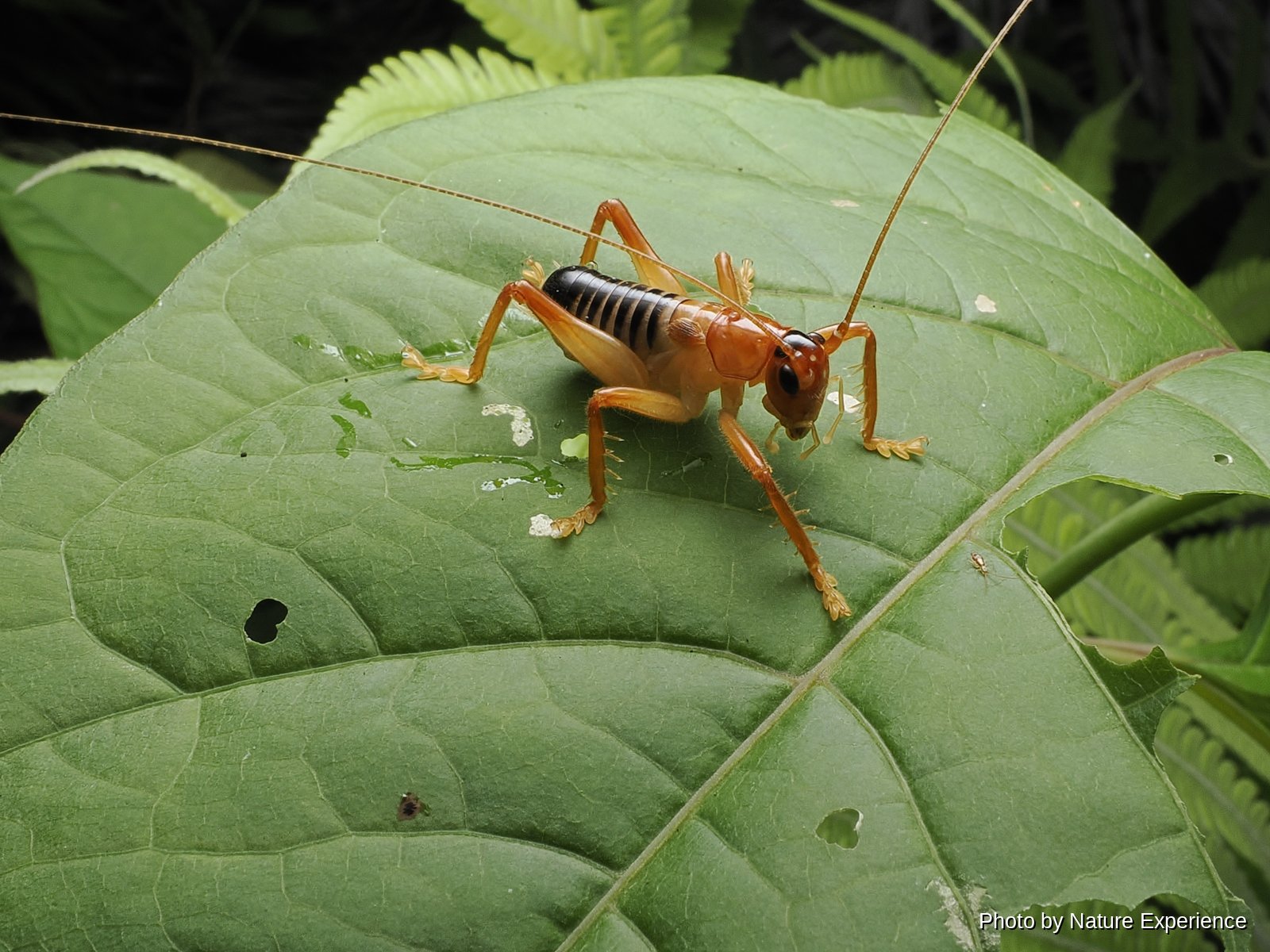
Body length 12-24mm in males and 17-27mm in females. A medium-sized raspy cricket whose wings, as its name suggests, are very small and inconspicuous. It is distributed in warm regions from Shizuoka Prefecture westward to the Nansei Islands. Its body is orange-tinged brown. By day it hides in a nest of leaves bound together with silk spun from its mouth, and at night it comes out to catch and eat other insects.
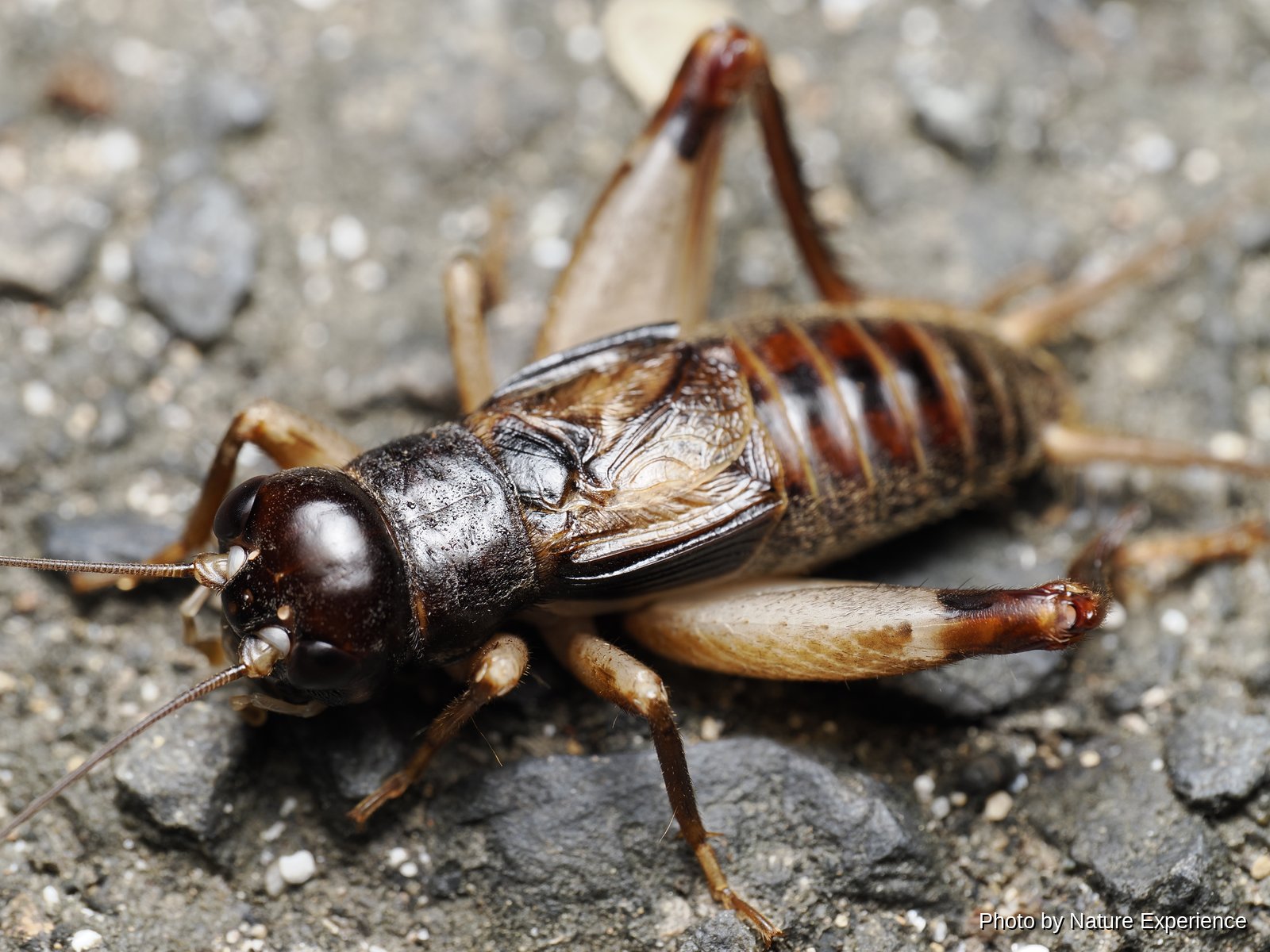
A somewhat large cricket-like insect, 31–35mm long. Widely distributed across the Nansei Islands, including Amami Oshima and Tokunoshima, it lives hidden beneath the bark of rotting wood, as its Japanese name suggests. At night it calls with a distinctive "gwiii, gwiii." In warm regions, adults can be seen year-round regardless of season.
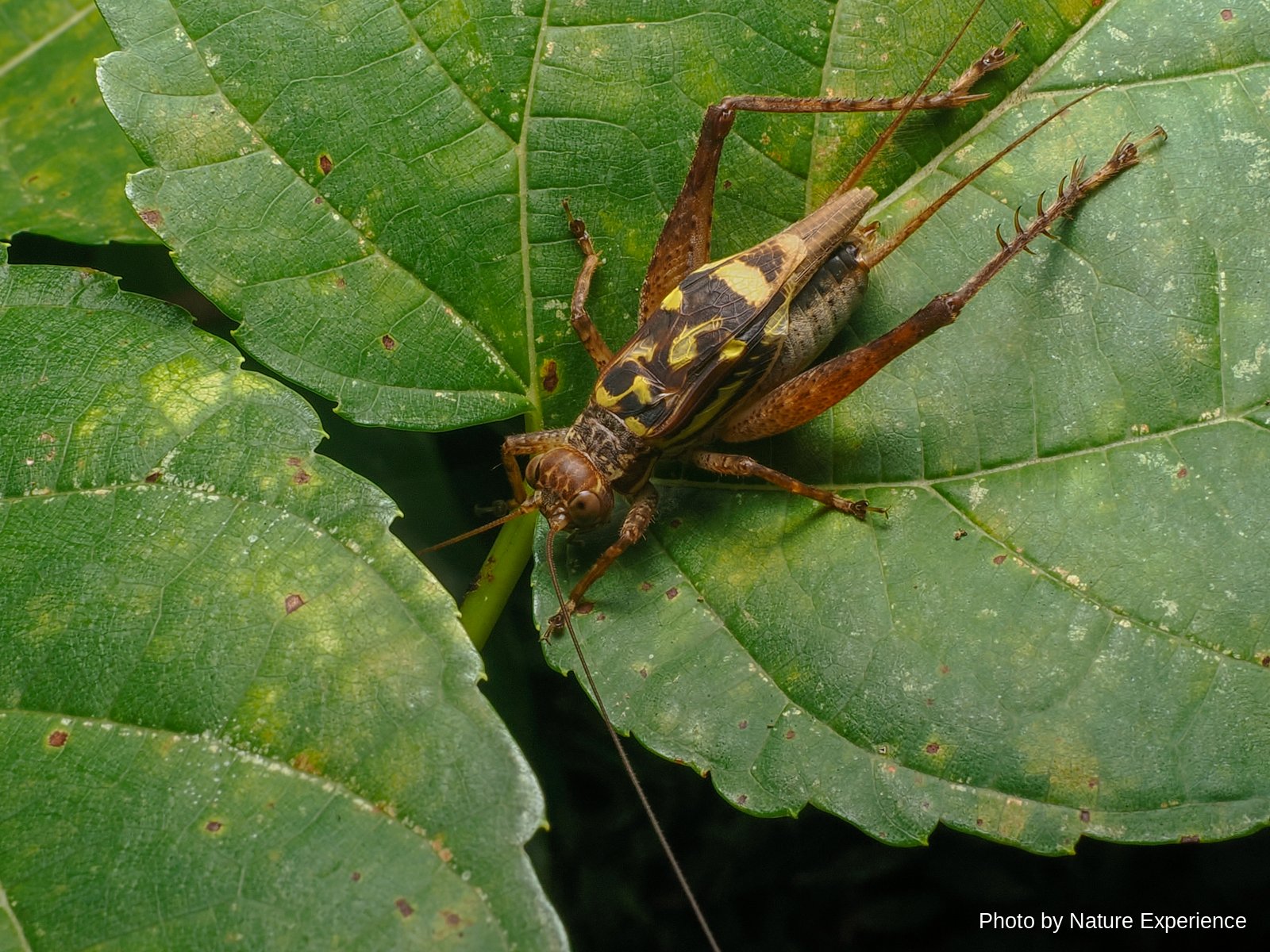
Although its Japanese name means "cricket," it is taxonomically a bush cricket. It lives in the forests of the Nansei Islands south of the Tokara Islands, and in the Amami Islands adults appear from around late August. It often gathers on tree trunks day and night, calling with a sharp "chit, chit" sound. It is abundant and serves as an important food source for reptiles and birds.
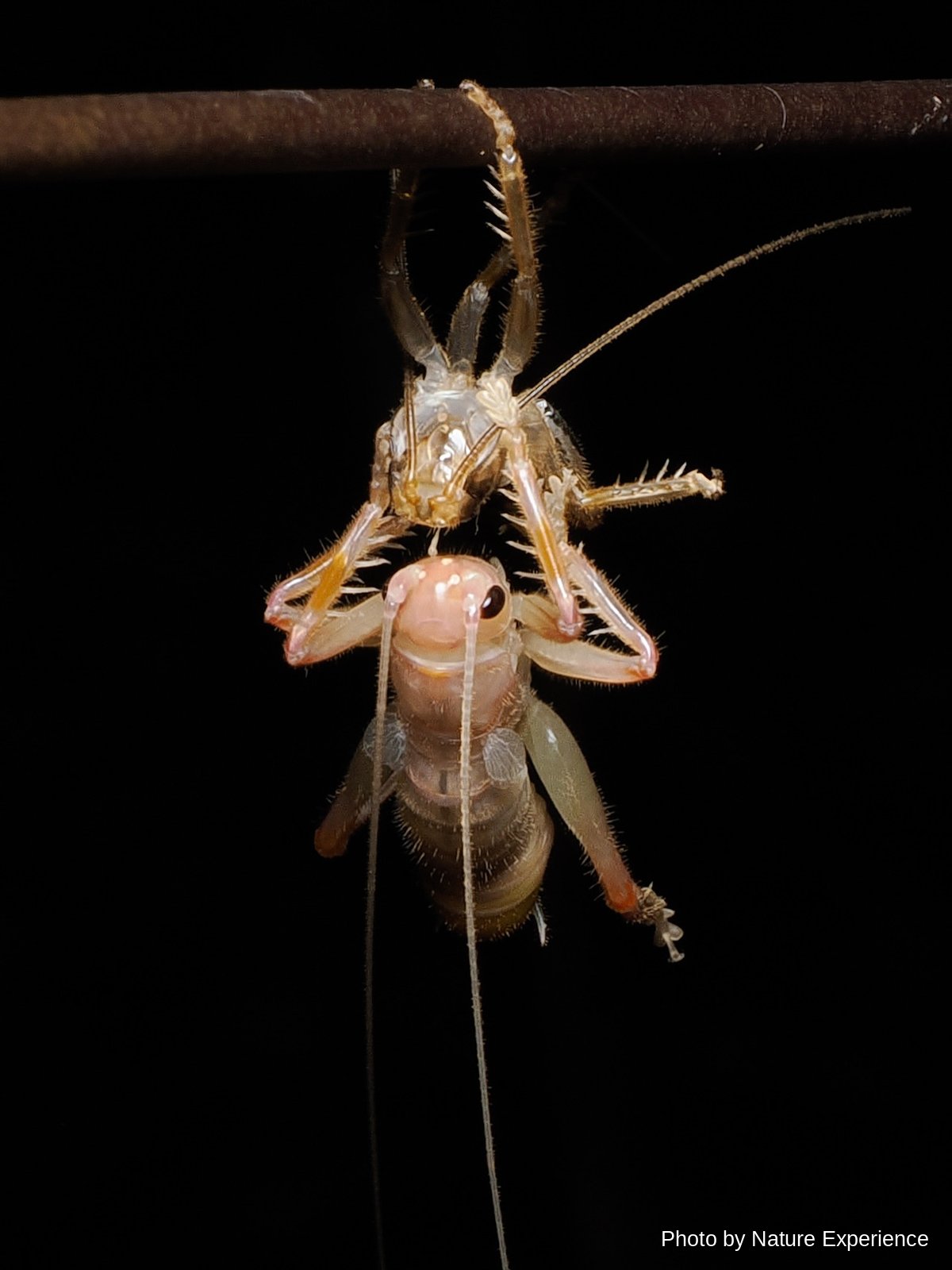
An arboreal raspy cricket found on Takara Island, Amami Oshima, and Kakeroma Island. Its antennae are far longer than its body. By day it hides in a nest of leaves bound together with its own silk, emerging at night to be active. Strongly carnivorous, it preys on other insects. It is very wary and difficult to spot.
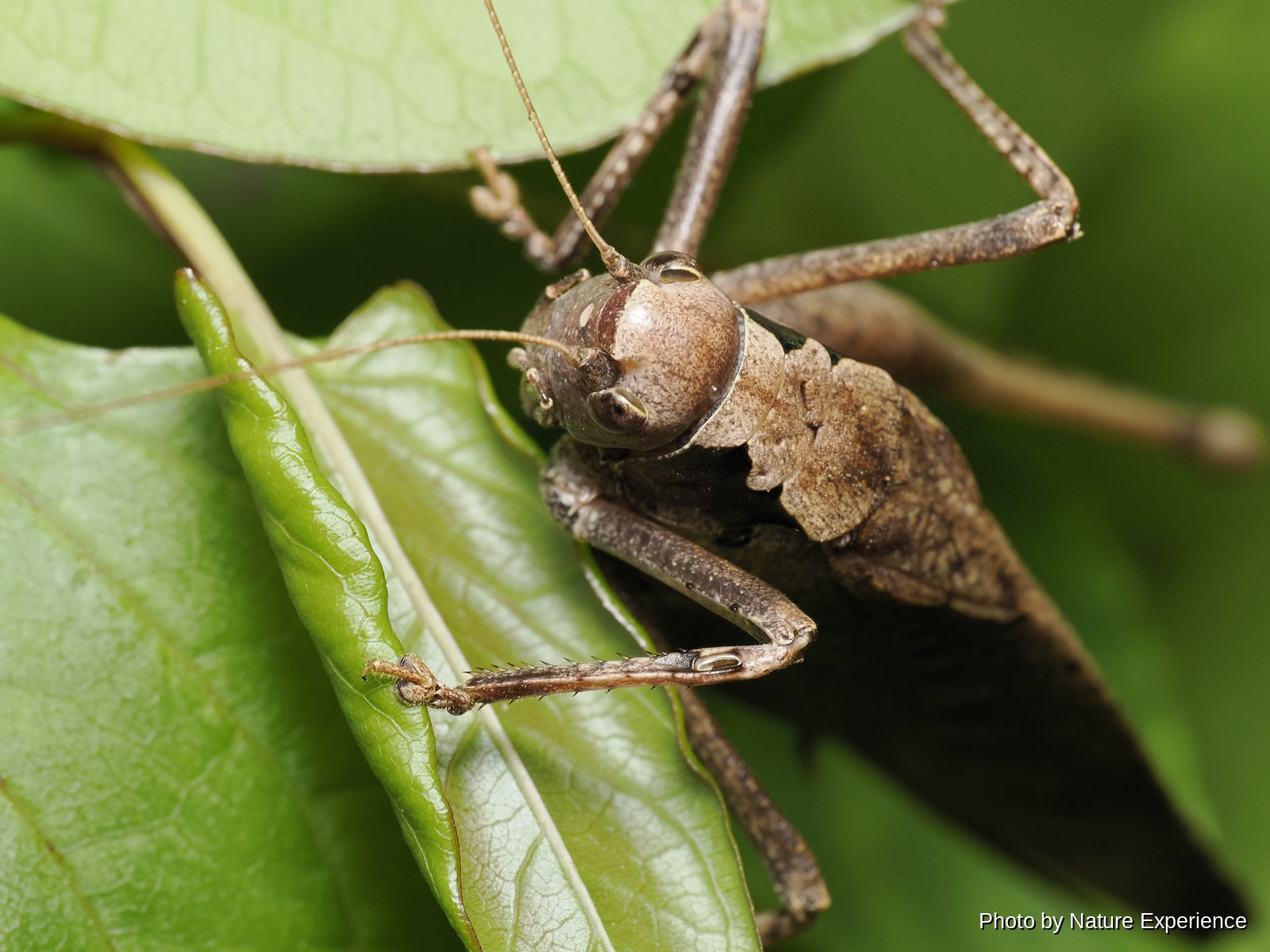
A katydid found in warm regions from the Izu Peninsula southward, including Amami Oshima and the rest of the Nansei Islands. It begins calling in late summer, and as autumn deepens it sings loudly with a rattling "gyururururu." Its early calls are spaced apart — "gyuu, gyuu" — before gradually becoming one continuous, unbroken sound.