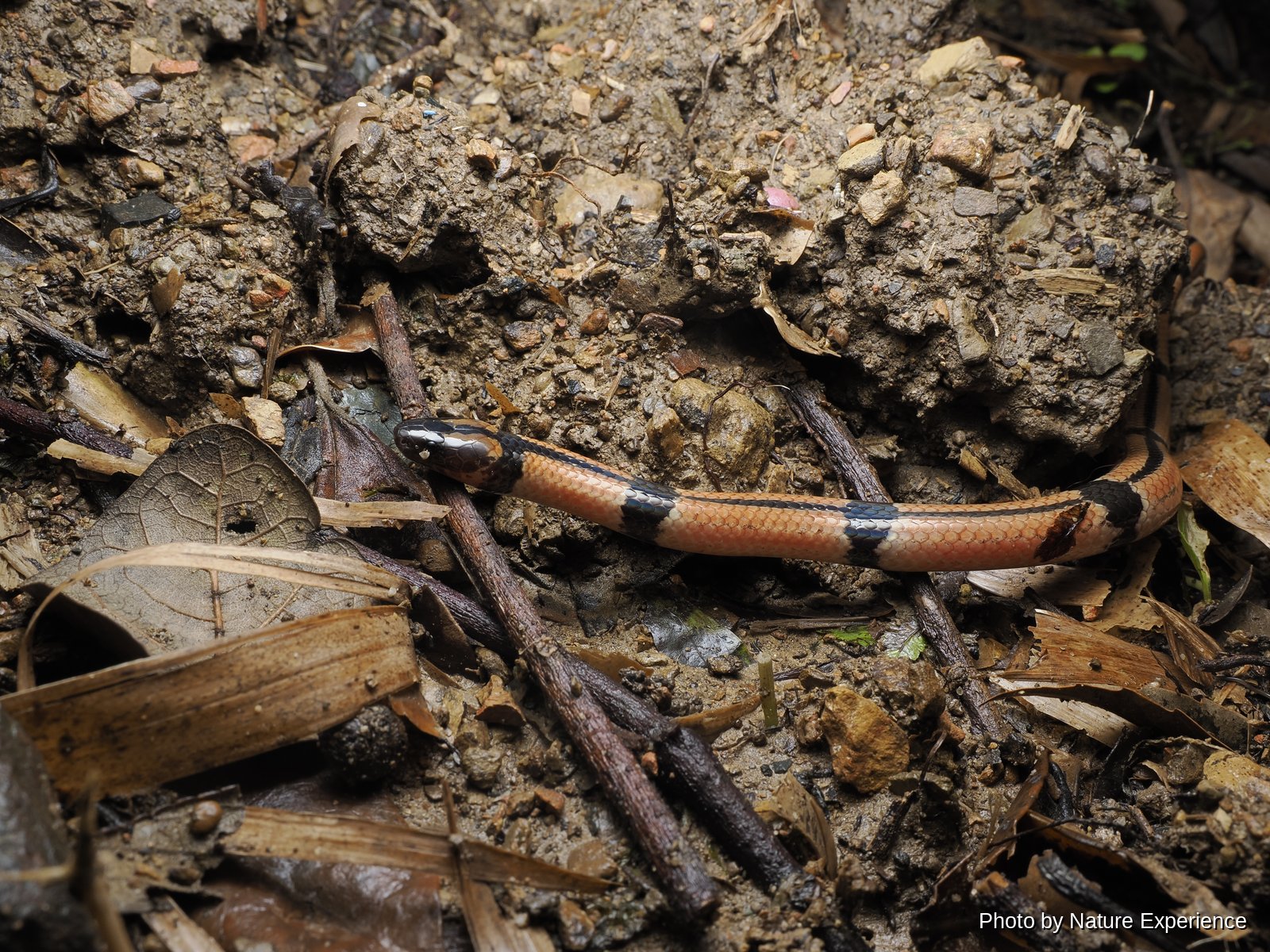
Akamata Snake
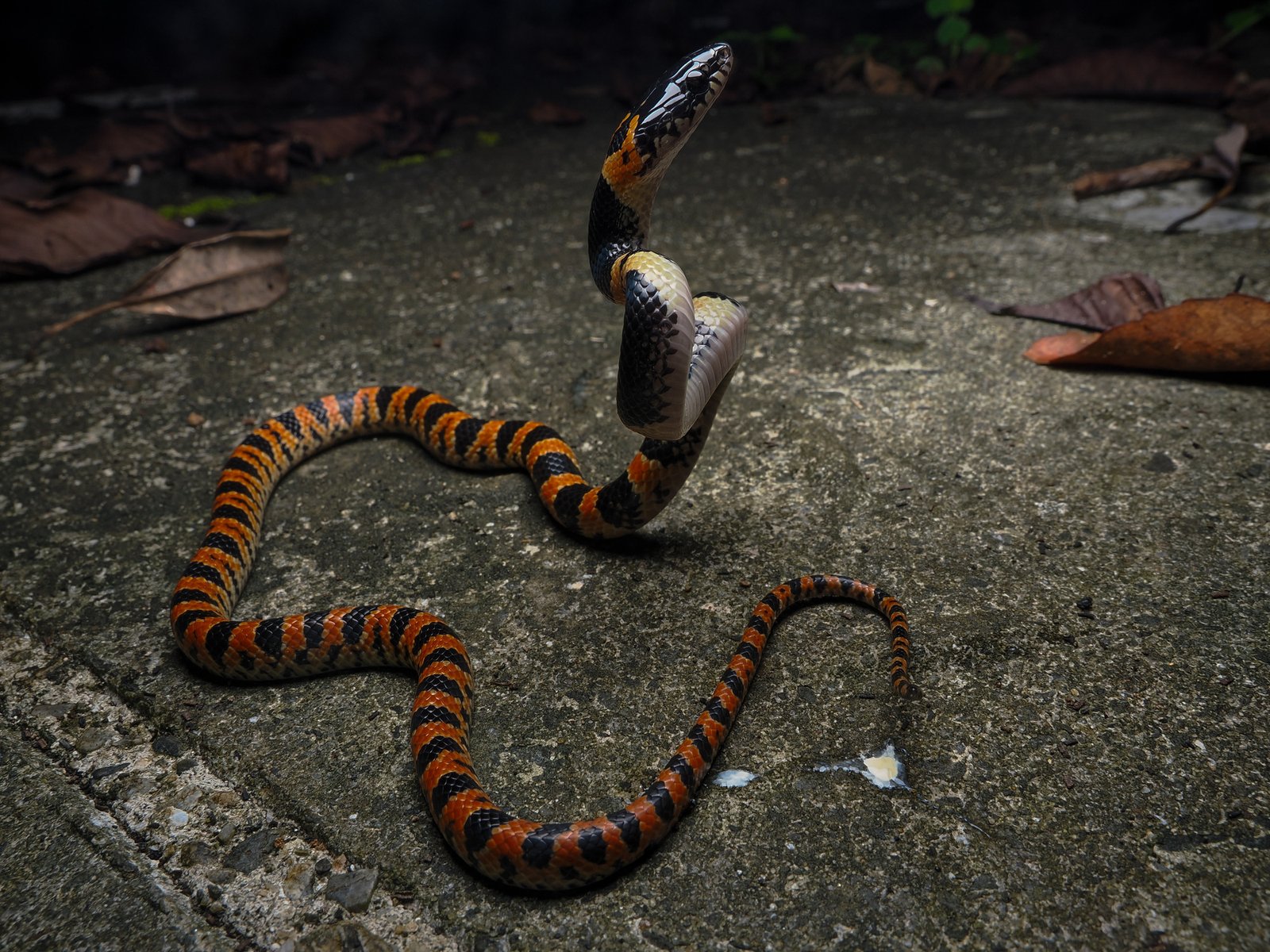
Grows up to about 200 cm. Most easily observed from May through November. The body is yellowish brown with red-and-black oval crossbands.
CREATURES / SNAKES
The snakes you meet in Amami Oshima's night forest. Some venomous, some not, and each living in its own preferred setting — forest floor or waterside.
ABOUT
A variety of snakes live on Amami Oshima, the Habu among them. Most are nocturnal, and as dusk falls and the forest grows quiet, they gradually become active.
Even among snakes, habitat, active hours, and diet differ from species to species. Some live deep in the forest, while others turn up near water or in the grass.
Walking Amami's night forest, you may come across snakes like these. If you spot one, first put some distance between you, then quietly observe its shape and movement.
On Amami Oshima you may encounter venomous snakes such as the Habu and the Okinawa pit viper. Watch your footing and the grass around you at night, and never approach or touch a snake, even if you spot one.
SNAKES OF AMAMI
A look at the snakes recorded on Amami Oshima that you may encounter in the night forest. Click a photo or name to see that species' full page.
Grows up to about 200 cm. Most easily observed from May through November. The body is yellowish brown with red-and-black oval crossbands.
Grows up to about 110 cm. Most easily observed from May through November. Slender-bodied, with a black or blackish-brown color and yellow or brown banding along the body.
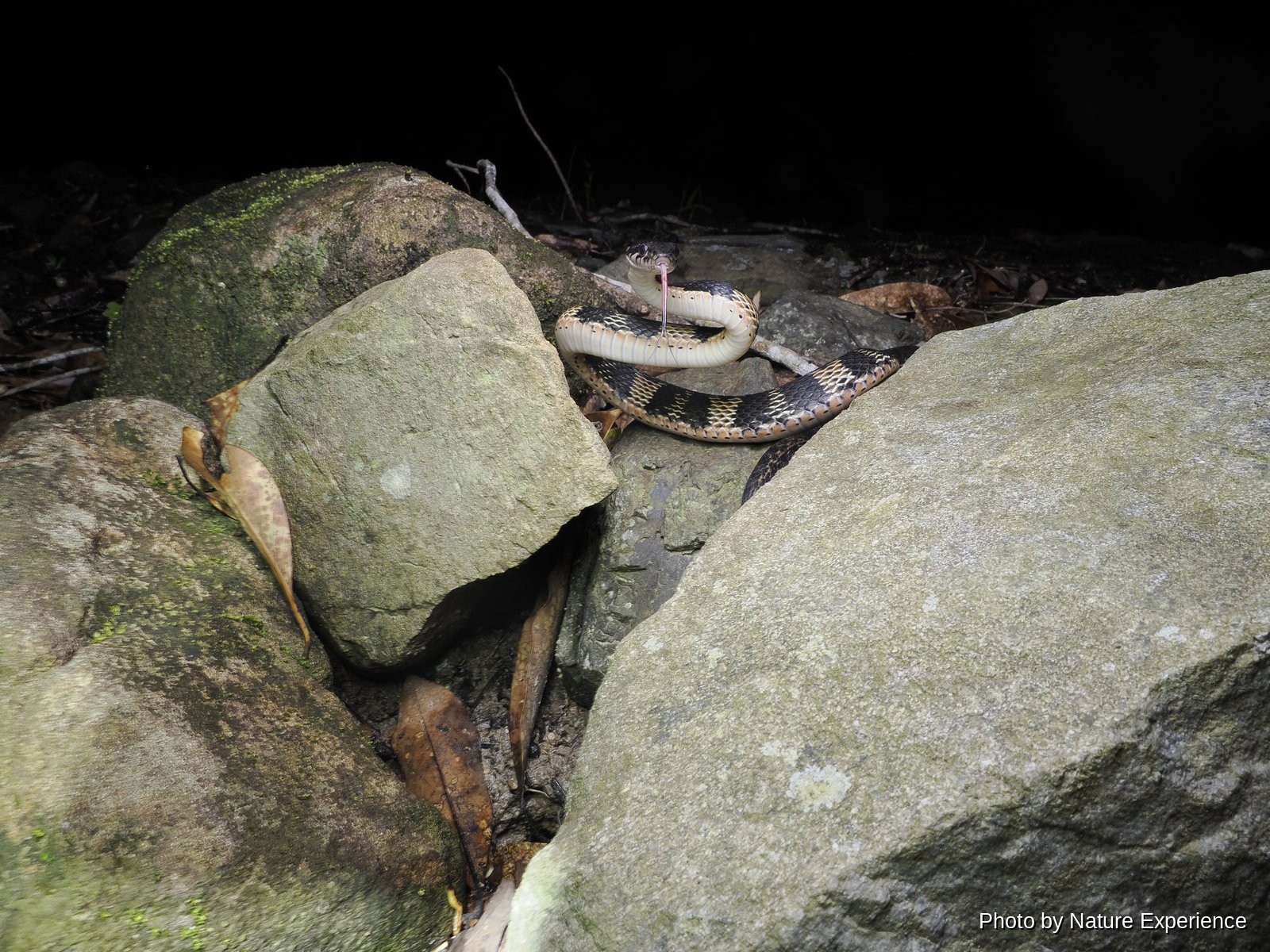
Grows up to about 226 cm, one of the largest snakes on the island. Most active and easiest to observe from May through November…
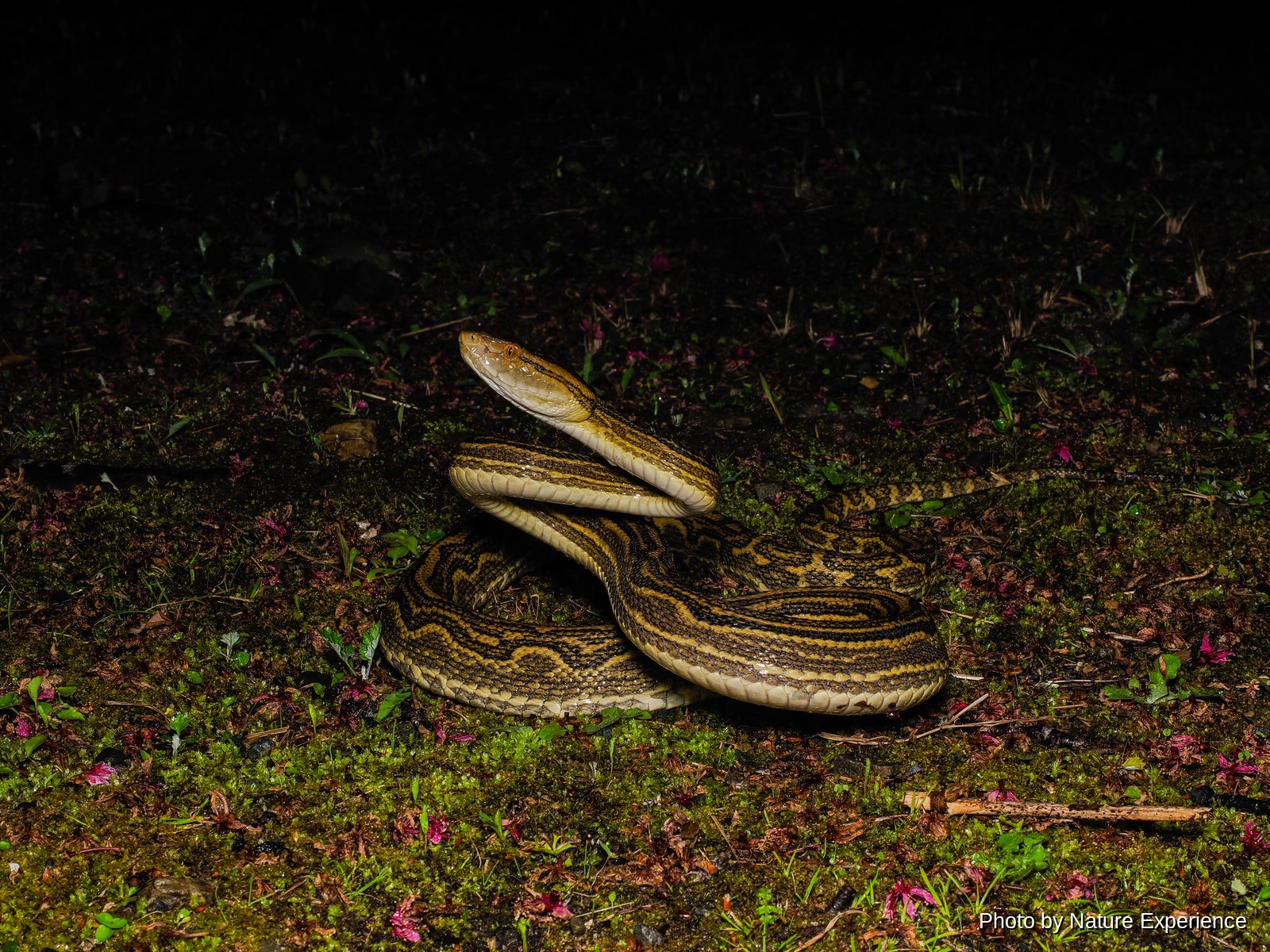
Grows up to about 80 cm. Cold-tolerant, and on Amami Oshima it can be observed year-round.
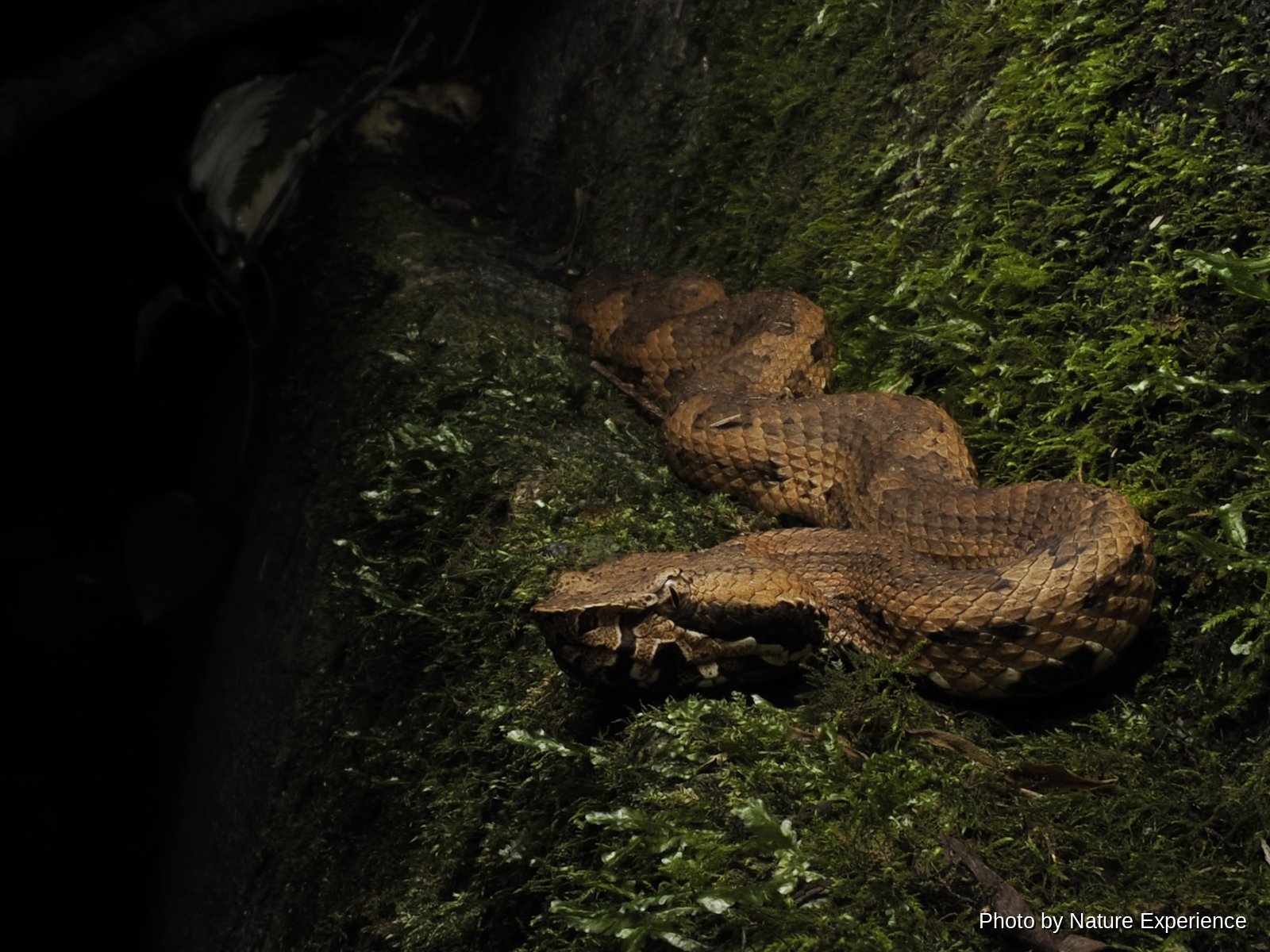
Grows up to about 50 cm. Most easily observed around May and around September. The back is reddish-brown or orange with five dark brown longitudinal stripes.
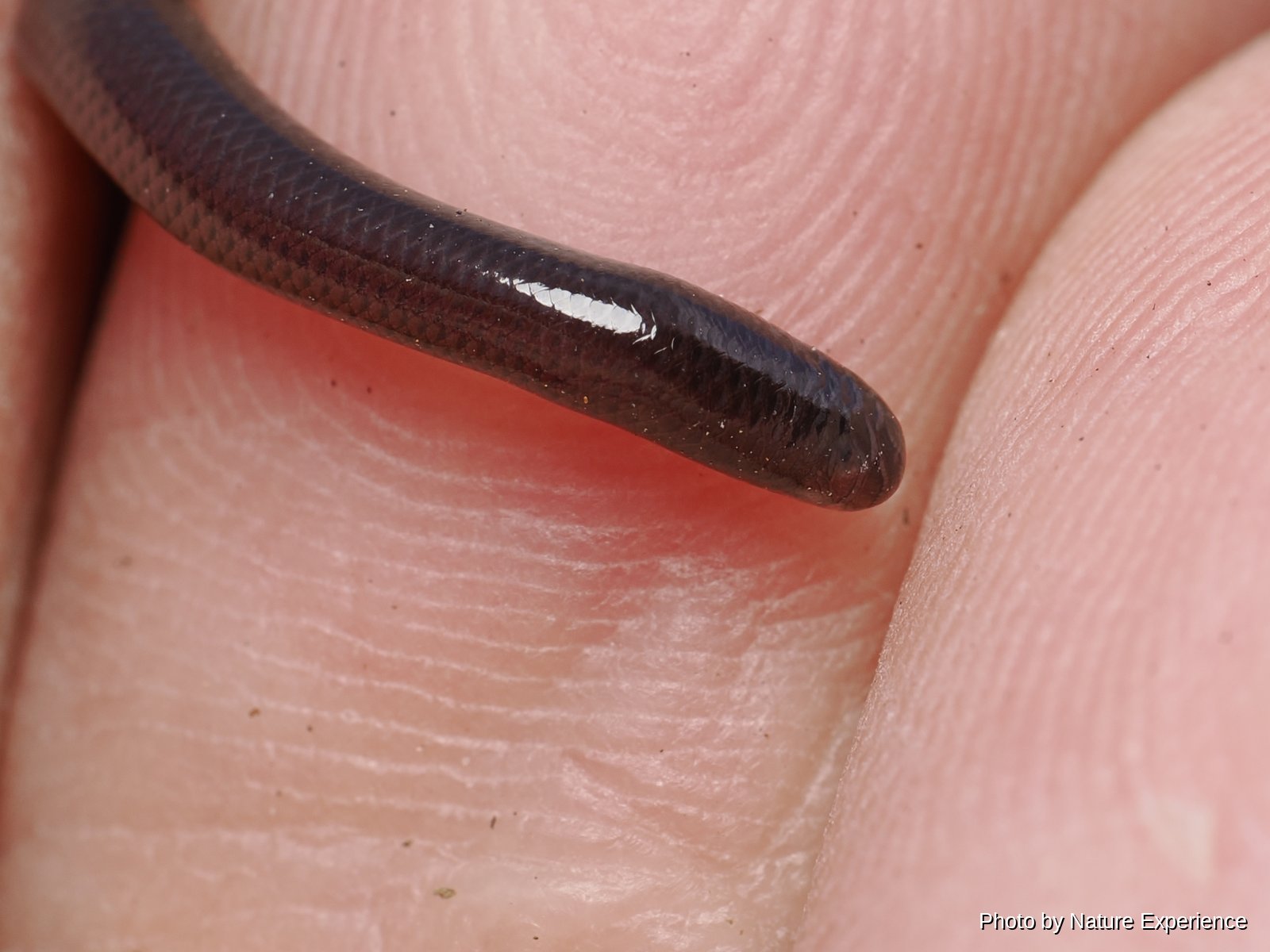
Japan's smallest snake, reaching about 15-20 cm in total length. Its body is a thin, worm-like cylinder, blackish brown in color, and its eyes are reduced beneath the…
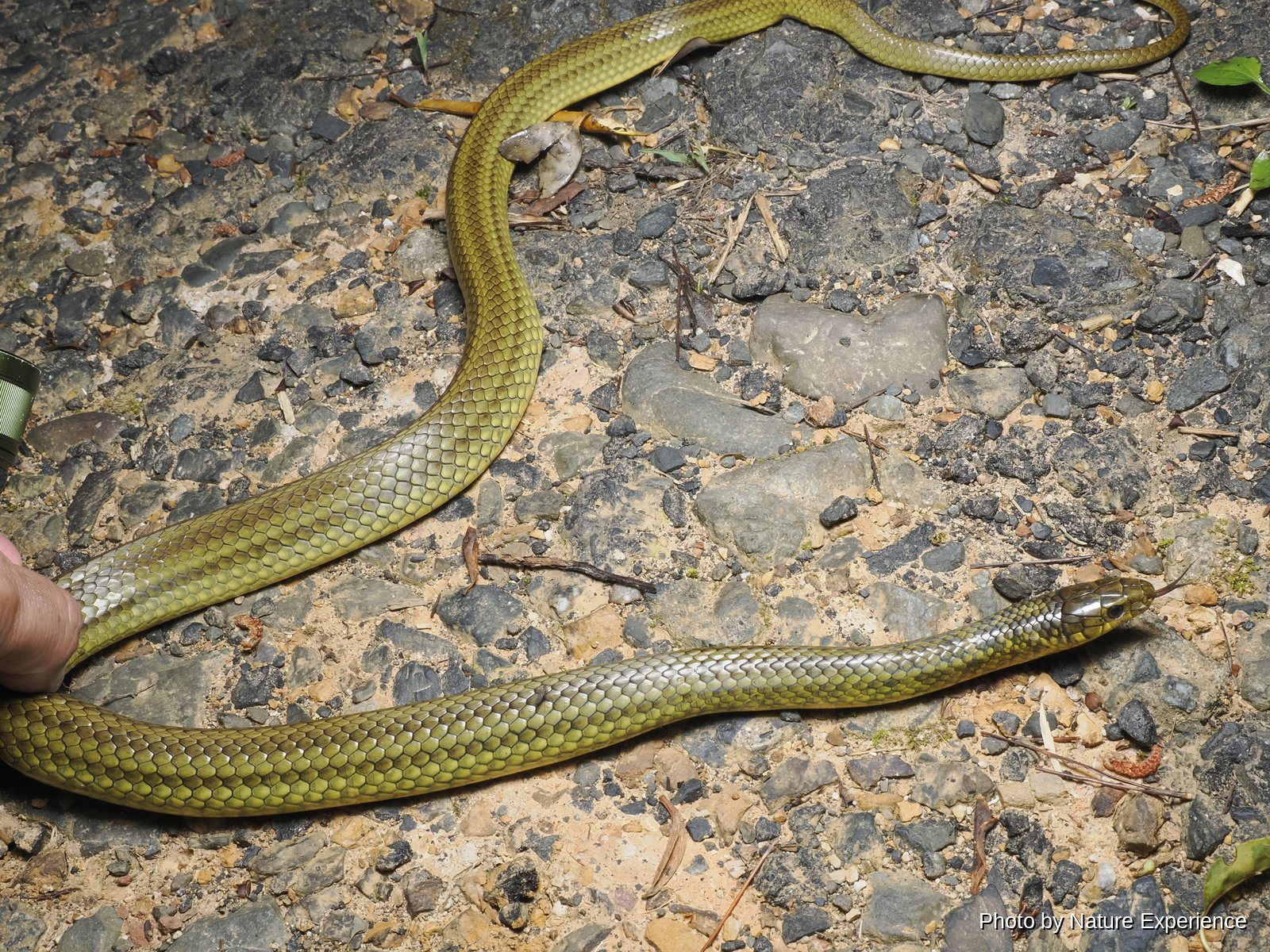
Grows up to about 100 cm. Most easily observed from May through November. Mainly diurnal, though many individuals are also active at night.
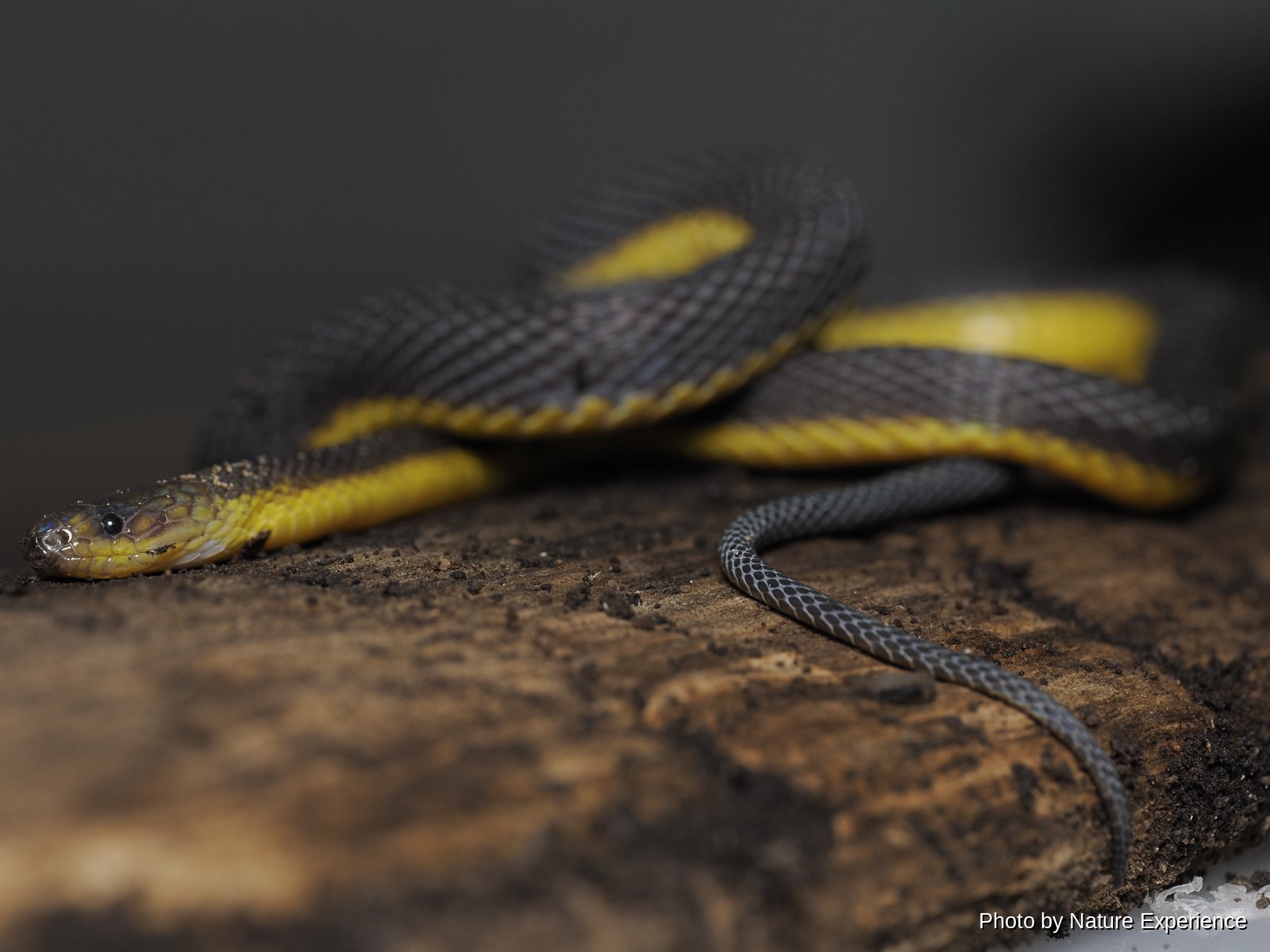
Grows up to about 55 cm. The back is blackish brown or dark brown with a black stripe running along the midline; the belly is yellow.
EXPLORE MORE
Pick a category to see more of Amami Oshima's wildlife.
NIGHT FIELD TOUR
Join a guide and search for wildlife together in the night forest.
See night tour details and pricing →